

Michigan boxwoods are being eviscerated by pests and diseases
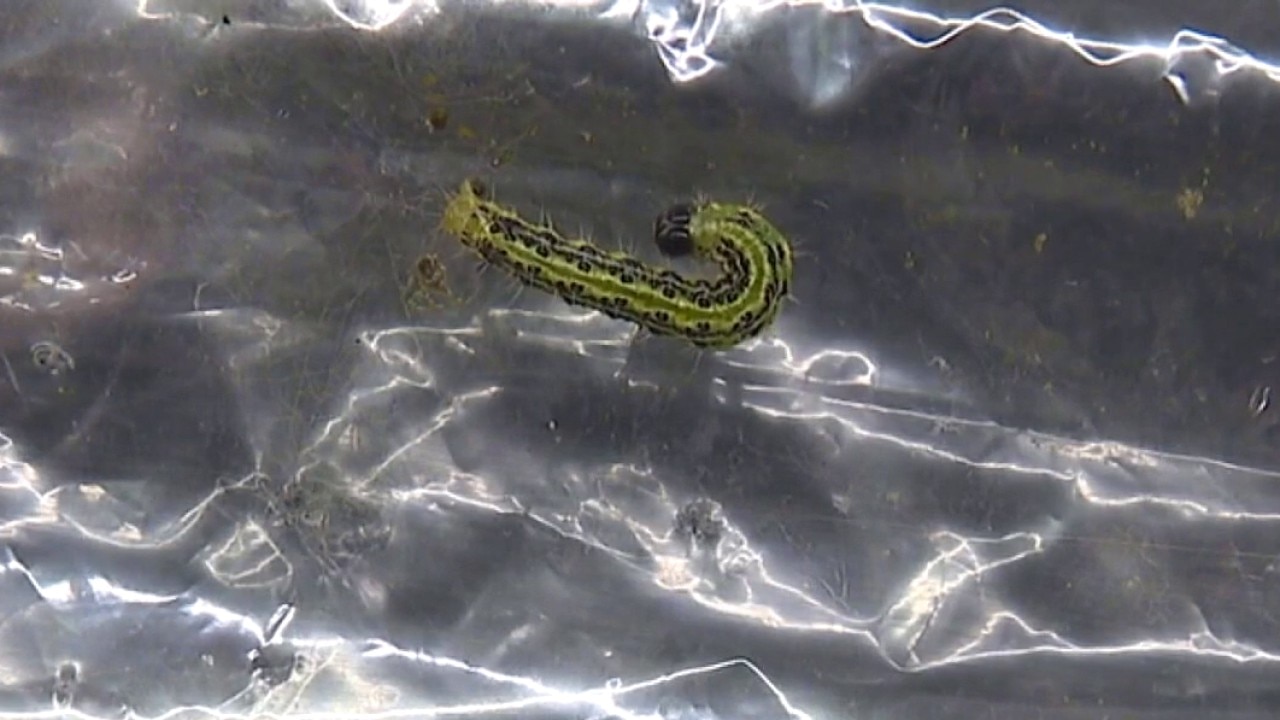
Beware the Box Tree Moth consuming your boxwoods
If you've noticed your boxwoods are suffering, there are several reasons that may be the case. One of the likely reasons is the box tree moth, which has been eviscerating the bushes for years in Michigan.
(FOX 2) - Michigan boxwoods are not alright.
All across the state, the hardy bush is being eviscerated by invasive pests, drought, mites, and blight. Beloved for its low maintenance and leafy exterior, boxwoods are now the victim of a range of problems.
"Pandora's box is open and this will continue to spread," said Mark VanderWerp, with Rose Pest Solutions, referring to one of the biggest threats of boxwoods: the box tree moth. "This thing has gone international."
Boxwood problems
Big picture view:
Boxwoods are frequently used for landscaping because they are easy to trim, easily cut into different shapes, and resistant to deer.
Unfortunately, the benefits of the low-maintenance plant must now compete with the complications they invite, including diseases, pests, and seasonal environmental problems.
They include:
- Winter Injury
- Drought Stress
- Psyllids
- Leafminers
- Spider Mites
- Volutella stem canker
- Boxwood blight
- Box Tree Moth
Caitlin Splawski, a floriculture educator with Michigan State University Extension, said each disease adds more pressure and stress on the boxwood. However, the box tree moth is what may push the state's issues into a new category.
"(They're) the straw that broke the camel's back — the box tree moth might be that for our area of Southeast Michigan," she said.
Winter Damage
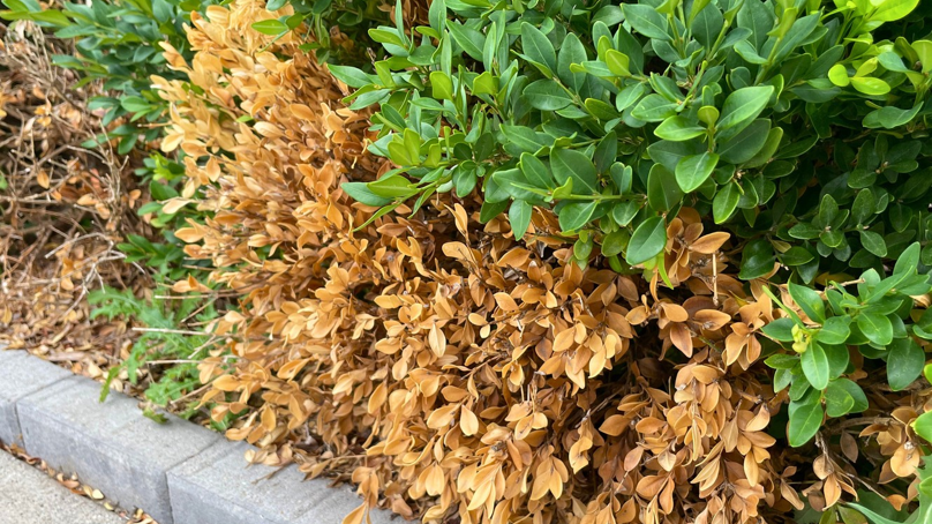
Photo: Caitlin Splawski
Box Tree Moth
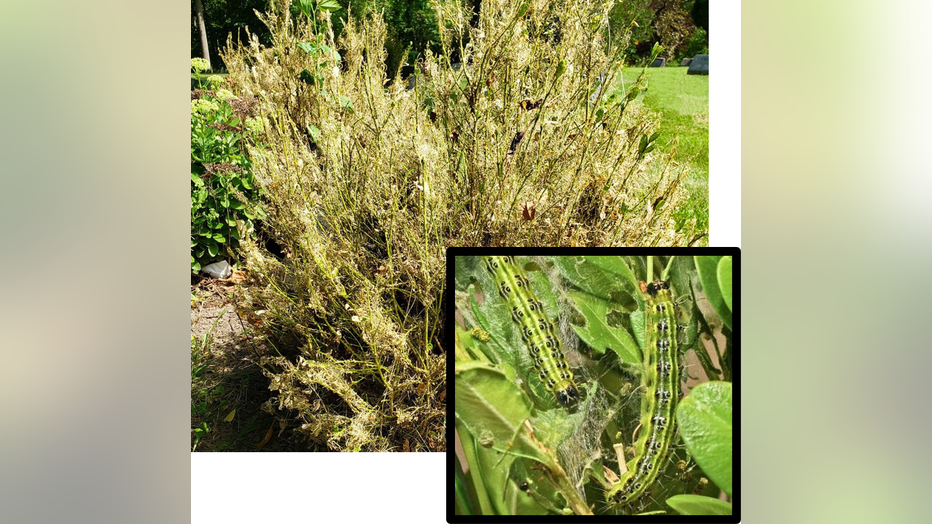
Photos: Hannah Nadel, USDA & Mafalda Weldon, USDA
Leafminer
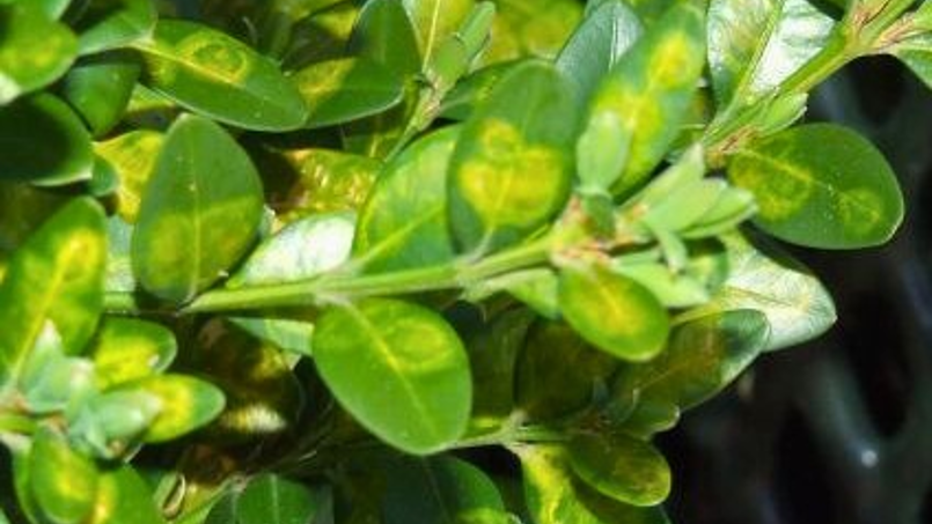
Photo: Rebecca Finneran, MSU Extension
Boxwood Blight
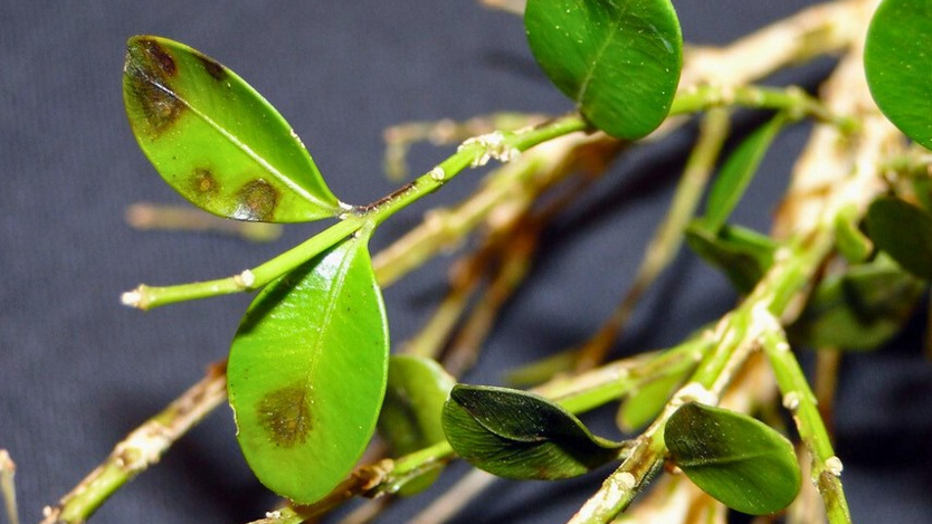
Photo: Sharon M. Douglas, University of Connecticut
Boxwood Psyllid
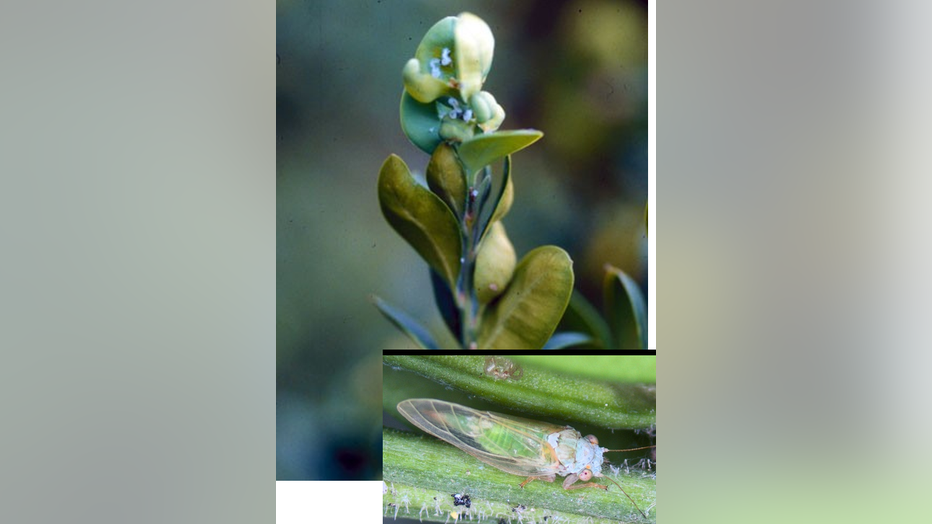
Photos: Daniel Herms, The Ohio State University, Bugwood.org & Sarah Hughson, MSU Extension
Boxwood Mites
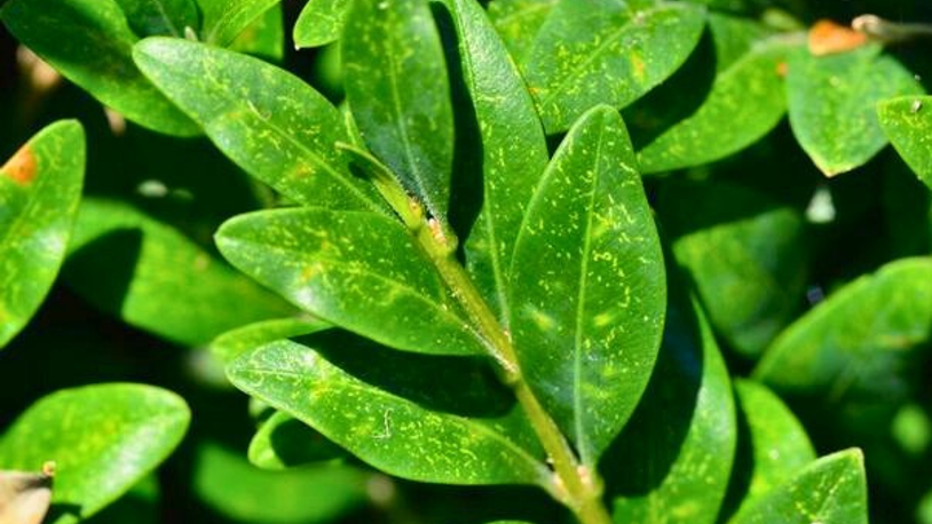
Photo: David L. Clement, University of Maryland
Box Tree Moth
Dig deeper:
The box tree moth arrived in North America in 2018 when it was detected in Canada. A nursery in Toronto is believed to have been the source of their arrival in the U.S. when infested boxwoods were shipped to six states.
Arriving in Michigan in 2022 and has since spread to 13 counties.
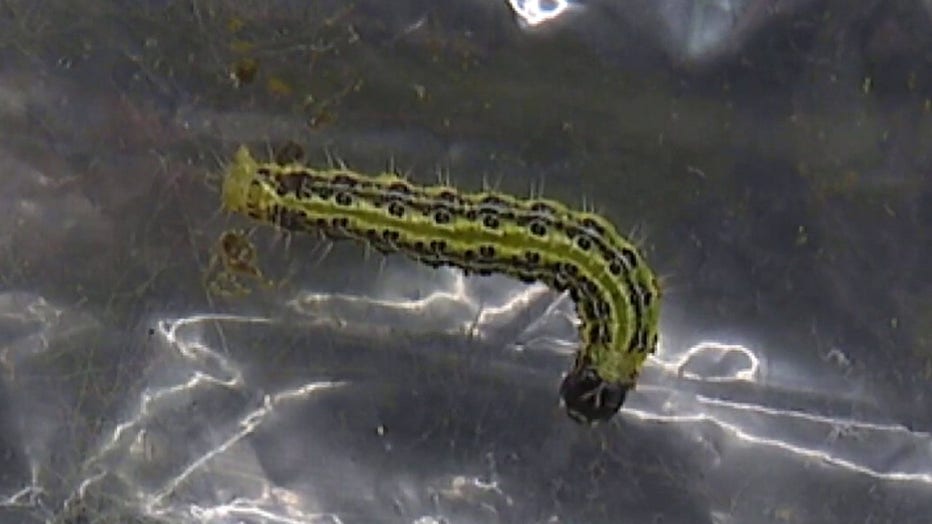
The box tree moth as a caterpillar.
Before the moth's metamorphosis, the caterpillar feeds aggressively on boxwood leaves. Early warning signs of an infestation include:
- Leaves that appear clear or translucent because young larvae scrape away the surface.
- Webbing produced by the larvae.
- Large amounts of caterpillar droppings, known as frass.
- Browning and increasingly severe leaf damage.
- Mature caterpillars measuring about one inch long.
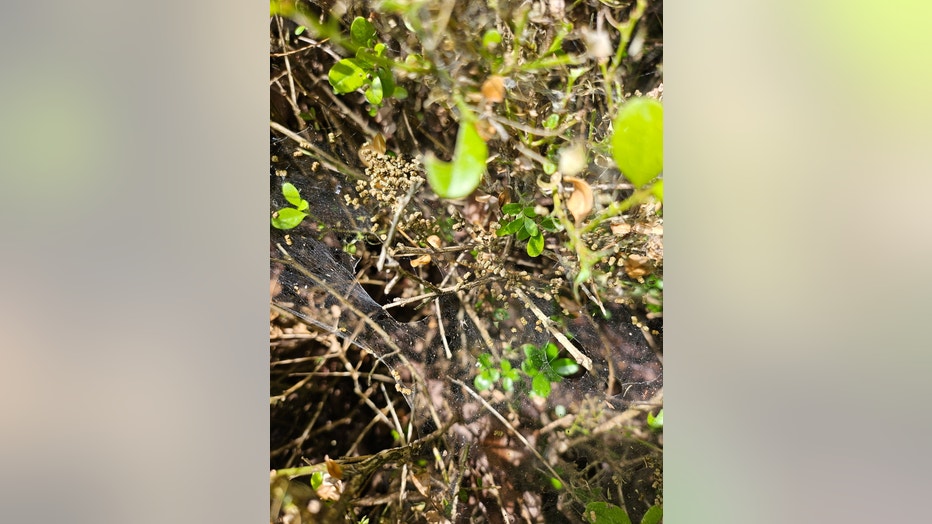
Webbing and caterpillar droppings on a boxwood.
VanderWerp said the spread of the box tree moth is likely going to pick up over the next few years.
"You never get complete control once you release an invasive into a new environment," he said. "The only opportunity for eradication happens right after you notice it. We are well past that."
Boxwood Remedies
What you can do:
There are several things that homeowners can do to remedy their situation. Chief among them is remove the affected boxwoods and replace them with lower-maintenance plants. That includes native alternatives like inkberry holly or New Jersey tea.
VanderWerp also suggests killing the caterpillars if the infestation is small enough, or applying a pesticide called BT (Bacillus thuringiensis). Make sure to apply it at night because sunlight breaks it down quickly.
For other problems, Splawski suggests submitting photographs of the boxwoods to MSU Extension's Ask Extension service. They can provide additional information as far as diagnosing the illness and identifying a solution.
Submissions can be entered at this link.
The Source: Experts from Michigan State Extension and Rose Pest Solutions were cited for this story.