

Detroit River Hawk Watch counting birds by the tens of thousands

Chirp Nook's guide to birding, Memorial swims, and Fish Cleaning | Brother Nature
Getting into birding is as easy as leaving out some seeds and mixing in a little patience. But there's so much more to the hobby for those with enough interest. Carissa with Chirp Nook explains the best way to get involved. Also on Brother Nature this week, freaky fungus, memorial swims, a rare cactus blooms in West Bloomfield, and a campaign to build a fish cleaning station for Lake St. Clair.
(FOX 2) - The official counters of the Detroit River Hawk Watch have been putting in overtime over the past week as tens of thousands of birds migrated south.
The annual count looks to calculate just how many birds of prey are passing over Southeast Michigan, tracing the patterns that birds have followed for years.
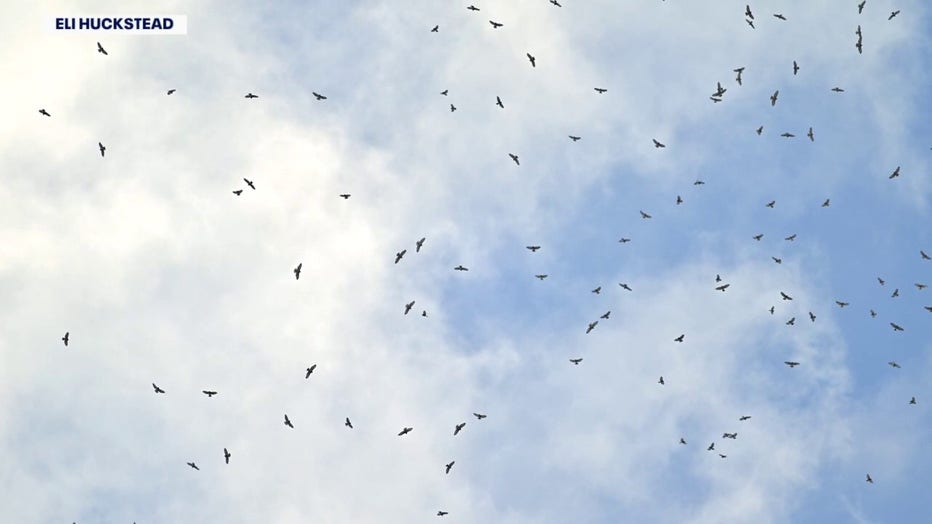
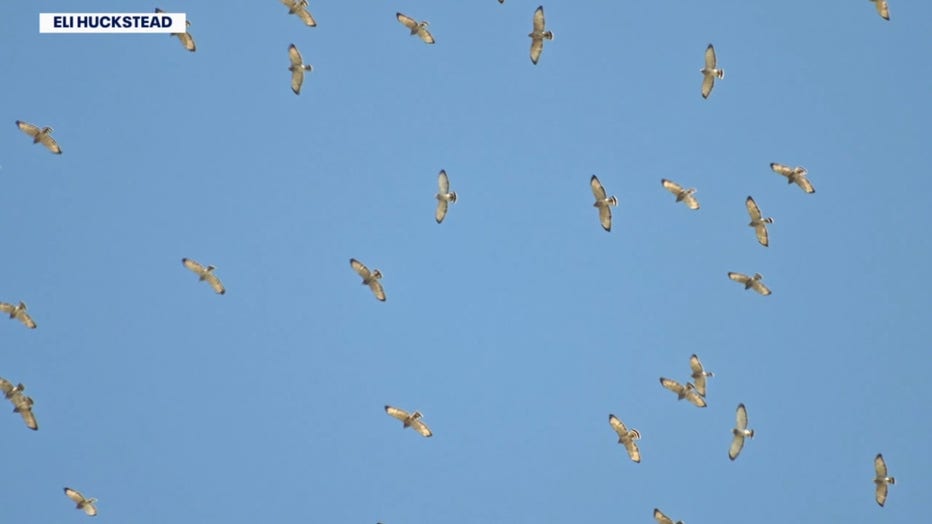
So far, northern harriers, turkey vultures, bald eagles, sharp-shinned hawks, American kestrels and even a cooper's hawk have been spotted this season. However, the main bird keeping the counters busy is the broad-winged hawk.
"This is prime time for our birds to come through," said Kevin Arnold, southern district interpretive supervisor at the Huron-Clinton Metroparks.
Detroit River Hawk Watch
By the numbers:
"We had our own avian version of the Kentucky Derby this morning," reads a description of the weather on Sept. 21 as the daily hawk count got underway at Lake Erie Metropark.
Every year, counters and enthusiasts gather at the metropark to gawk at wave after wave of hawks traversing their migratory patterns from northern Canada through the continental United States.
"One has to marvel, no matter how many times you have witnessed it, at the sheer numbers of birds that have managed to find each other in order to keep company as they venture to South America," according to the observation notes posted on Monday.
In total, 31,963 broad-winged hawks were counted on Monday — which is about 4,000 fewer than the banner day for the same species on Sept. 18 when nearly 36,000 were counted.
How to count hawks
Local perspective:
Official counters make the trek every day to the Lake Erie Metropark outlook where the Detroit River drains into Lake Erie during the migration season.
The counters are trained to tally passing birds by 2's, 10's, and 50's, depending on how big the cluster is, according to a member of the Detroit River Hawk Watch Advisory Committee.
"Our protocol calls for counting the birds when they cross the channel, and luckily they are streaming, so its easier to get an accurate count as opposed to when they are kettling and swirling in and out of view," Jerry Jourdan said on the Detroit River Hawk Watch Facebook page.
When to see which birds
Big picture view:
While broad-winged hawks often make up the biggest groups of passing birds, there are several others that migrate as well. But they all end up passing through partly because of the wind patterns and the geography of the area, giving a launchpad over Lake Erie.
September
Osprey and sharp-shinned hawks are the typically the first to arrive at the count site. Broad-winged hawks, swainson's hawks, and American kestrels also pass through this time of the season.
October
Red-shouldered hawks, red-tailed hawks, cooper's hawks, and turkey vultures are the next birds to appear, typically in October.
November
For those willing to grit through the cold weather, November features some of the bucket list items on many people's lists, including golden eagles, northern goshawks, and rough-legged hawks. These hawks are traveling from the furthest northern regions in Arctic Canada.
Dig deeper:
Just as much art as it is science, the hawks frequently travel following a cold front. They use columns of heat to give them lift as they make their journey south.
"They can travel long distances without having to flap a wing, so that's really energy conservation," said Kevin Arnold, southern district interpretive supervisor at the Huron-Clinton Metroparks.
The Source: The Detroit River Hawk Watch and the Huron-Clinton Metroparks were cited for this story.