

Rare yellow Burbot found in the Great Lakes
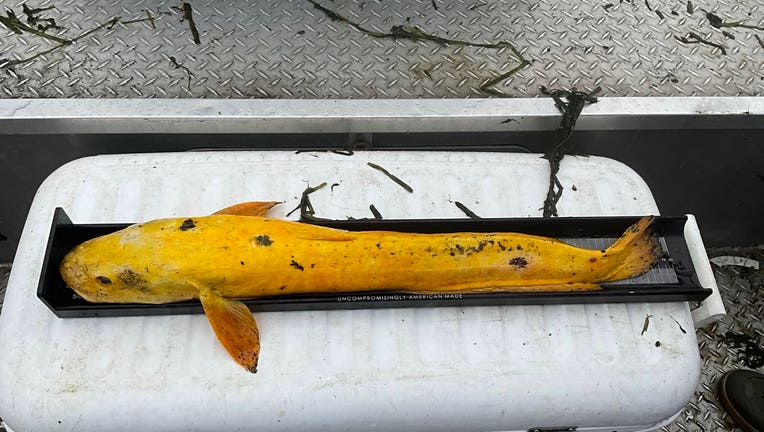
Xanthic Burbot on measuring board. Photo credit: Jake Cochran/USFWS
(FOX 2) - Scientists have discovered a rare yellow burbot in the Great Lakes while surveying for wildlife.
While the find was one-in-a-million, the discovery also revealed a fish with cancer and parasites in its body.
Burbots are an increasingly popular catch in the Great Lakes as anglers seek out the coldwater cod in Michigan's freshwater lakes. Burbot are known to have streaks of yellow color on their skin.
But an entirely yellow version, known as a xanthic Burbot, is due to a phenetic mutation that suppresses the non-yellow colors.
One-in-a-million Burbot discovery
Big picture view:
The Lower Great Lakes Fish & Wildlife Conservation Office announced on Facebook that crews in surveying for fish in poor condition in Lake Ontario caught the fish in Oswego Harbor.
The find was made in October.
Burbot carry the moniker eelpout, ling, bling, and poor-man's lobster because that's how it supposedly tastes — though experts dispute that fact. Michigan recently implemented catch limits on burbot due to the growing popularity of harvesting them.
The species remains a poorly-understood fish, which is why researchers are increasingly seeking them out to learn more about them.

Biologists taking a genetic fin clip sample from the xanthic Burbot as part of their routine data collection. Photo credit: Jacqueline Stephens/USFWS.
Dig deeper:
The Oswego Harbor find was notable for the health issues and diseases found in the fish.
After opening the fish up, scientists at Cornell University's College of Veterinary Medicine found a slew of problems. It had multiple skin lesions, carcinoma, and a parasitic infection in its kidneys.
Researchers are now working to better understand what environmental conditions could have contributed to the diseases.
Burbot behavior
The backstory:
Burbot can grow up to 40 inches long and can live more than 20 years. Some studies suggest they start laying eggs at 4 years old. They're recognizable because of their eel-like appearance and the sensory organ that hangs below their chin — known as a barbel.
Unlike other Great Lakes fish species, burbot are active at night, which is when anglers like Hinds choose to look for them. He says the peak season for burbot fishing is in mid-March when they spawn, targeting transition areas that blend from rocks to grass.
And according to Shapiro, they have been known to travel over 70 miles from where they spawn in the winter before returning to the same location to lay eggs of their own.
The species prefers deeper, colder waters; inhabiting the bottom of larger systems like Saginaw Bay and Lake Michigamme, as well as larger inland waterways like Burt and Mullet lakes in the northern Lower Peninsula.
During spawning season, they'll gather in shallow areas under ice from December to February.
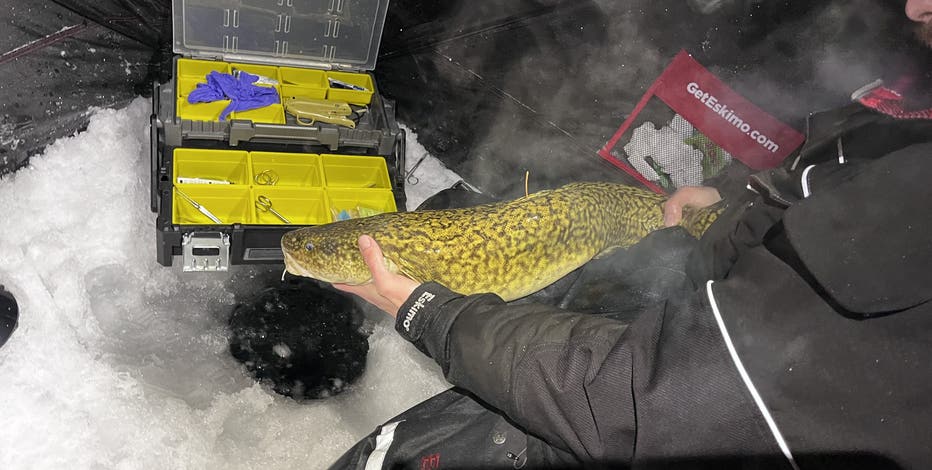
Wildlife regulators approve burbot catch limits in Michigan
Burbot fishing has grown in popularity recently. But so have the pressures on the species as invasive mussels continue to spread around their habitat.
The Source: The U.S. Fish and Wildlife Service and previous reporting were cited for this story.