

Iowa lead explosion aftermath: Here's what happens next
Lead mitigation efforts 'working' after Iowa detonation
The Executive Director of the Mississippi River Cities and Towns Initiative, Colin Wellenkamp says that the mitigation efforts to limit lead in the environment after the blast in Iowa have "worked."
MIDDLETOWN, Iowa - The U.S. Army completed its controlled detonation of degraded lead azide at the Iowa Army Ammunition Plant in Middletown, Iowa, on Wednesday morning.
President Donald Trump, military leaders and other government officials said the operation "exceeded expectations." Researchers are now tracking air quality, soil and water across the region to keep tabs on the environmental impact.
EPA testing soil and air for lead
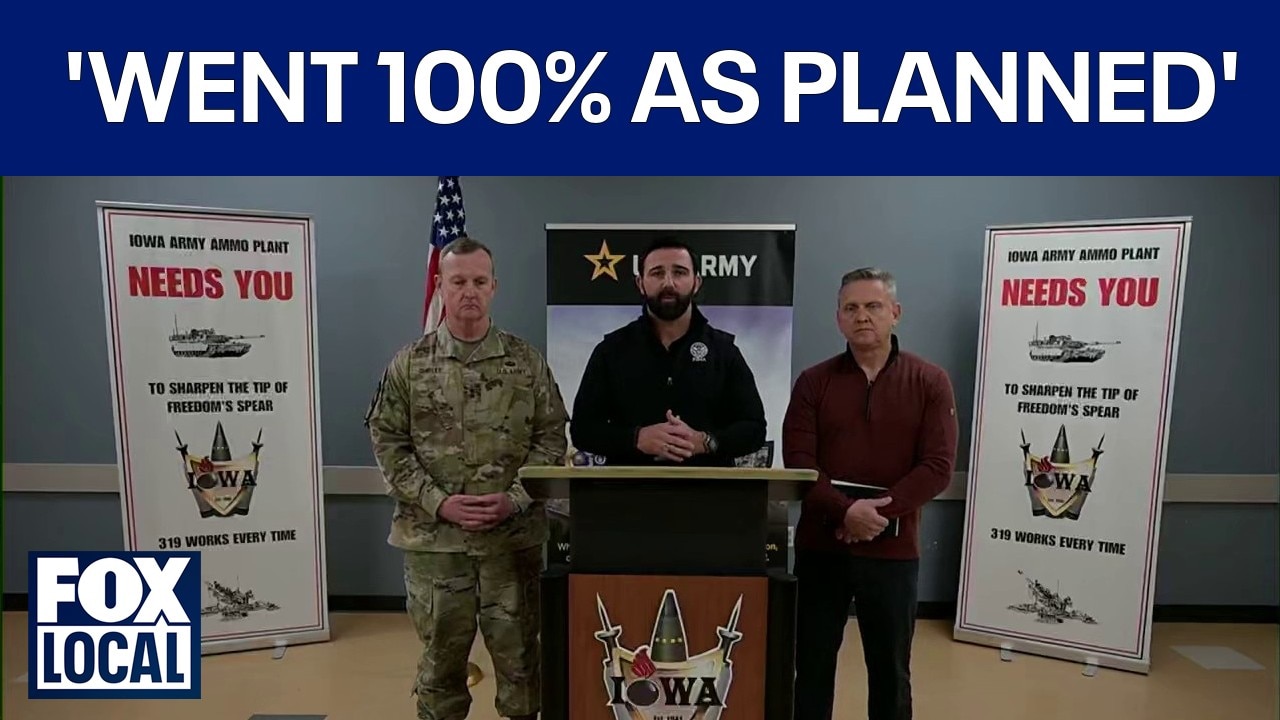
Army provides update after Iowa lead azide detonation [FULL]
The U.S. Army provides an update after detonating 10,000 pounds of bomb-making chemicals at the Iowa Army Ammunition Plant in Middletown, Iowa, on Wednesday, Nov. 25.
What they're saying:
On Thursday, Environmental Protection Agency chief Lee Zeldin said there's been "zero" detection of airborne lead in the region.
"We are sampling at schools, homes, playgrounds, farms, churches, daycare facilities, drinking water systems, water bodies and more," Zeldin wrote in an X post.
He said the EPA will continue to share results online, with the goal of completing all sample collection by the end of Thursday.
READ MORE: You or your property damaged during the Iowa explosion? The Army may cover you
The agency said its real-time air monitors ran throughout the explosion and never stopped collecting data.
Ahead of Wednesday's explosion, the EPA sent 300 employees and contractors to the region to track environmental conditions.
They collected 1,216 baseline samples, which included 650 soil samples, 297 dust samples, 210 water samples and 59 air samples. Those tests gave scientists a clear "before" picture of local lead levels in Middletown and the surrounding area prior to the blast.
NASA tracks the blast from the sky
Dig deeper:
NASA also gathered data from the site. The agency confirmed on Tuesday that used advanced scientific instruments to collect environmental and atmospheric data to help with the federal response.
Video captured during a live broadcast by local news station WQAD showed a NASA aircraft flying over the ammunition plant following the blast Wednesday morning.
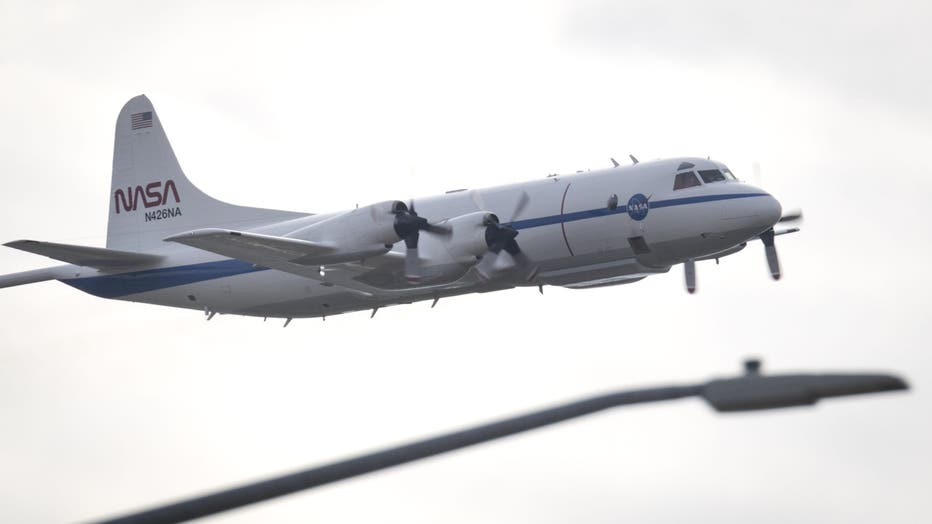
A NASA aircraft makes low passes over the town Middletown and the blast site after the Army detonated several tons of highly-volatile, degraded lead azide on the grounds of the Iowa Army Ammunition Plant on November 25, 2026 in Middletown, Iowa. (Pho
"NASA stands ready to bring its unique capabilities and world-class scientific expertise to bear whenever called upon in service of the nation and the American people," an X post from NASA reads.
The agency deployed personnel and three specialized research planes to the site: a P-3 Orion, a Gulfstream III and a contracted King Air B200. It's also using an air-pollution instrument called TEMPO to track air quality in the region.
Purdue University offers free soil testing
What you can do:
Researchers at Purdue University are offering an independent check on federal data by testing residential soil near the ammunition plant for free.
Purdue’s School of Health Sciences is asking local residents to mail in soil samples, so scientists can measure lead levels following Wednesday’s detonation.
Residents who want their property tested can use a clean plastic spoon to scoop three to six spoonfuls of topsoil into a resealable plastic bag. Researchers recommend wearing gloves and a face mask during collection.
Participants should place a note inside the bag with the collection date, their address and where the sample was taken, such as a front yard or garden. They should also include a phone number or email address, so researchers can explain the results.
Samples can be mailed to Dr. Ellen Wells at 550 Stadium Mall Drive, Hampton Hall 1263F, West Lafayette, IN 47907. Purdue will also post the findings anonymously online.
The Source: Information from this article comes from the Environmental Protection Agency, NASA and Purdue University. This story was written in Eden Prairie, Minnesota.