

Maurielle Lue to Detroit: Thank you for holding me up when I couldn't stand on my own

Detroit,
For weeks, many of you have been asking me a very simple question: "When are you coming back?" I'm proud to finally have an answer.
I'm back, baby!
But as I walk back onto the set at FOX 2, I want to talk to you—not as an anchor, not from behind a desk, but as the woman you've watched grow up on television for more than a decade. Because the woman coming back is not exactly the woman who left.
This has been the hardest season of my life.
I lost my father. And not long after, I needed significant foot surgery. Two enormous life events collided.
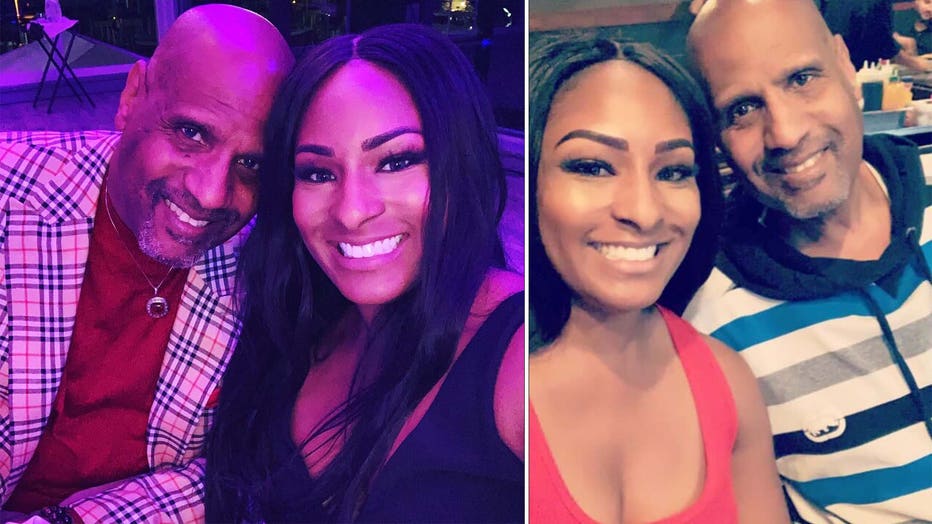
After my father died, I did what so many people do after loss: I tried to keep going. I went back to work.
There were mornings when I cried during the drive to the station, pulled into the parking lot, fixed my makeup, walked into the studio and did my job.
I laughed. I made you laugh. I smiled into a camera. And inside, I couldn't feel anything.
My heart could be beating so loudly I could hear it in my ears, while somehow the rest of me felt completely hollow.
That experience taught me something I don't think I fully understood before: Functioning and being OK are not the same thing.
A person can answer your email and be falling apart. A person can make the meeting and barely have gotten out of bed. A person can make an entire city laugh and then cry all the way home.
Then came surgery.
And my body finally forced me to do what my mind had refused to do: Stop.
This was not a simple procedure followed by a few days with my feet up. Surgery was followed by significant pain and swelling, limited mobility, a boot, a cane, physical therapy and weeks of restrictions on how much I could stand and walk.
I didn't manufacture foot surgery to get time to grieve.
I certainly didn't lose my father and think, Excellent. How can I exploit this?
Through two circumstances I never would have chosen, I ended up with something modern American life rarely gives grieving adults: Time.
Not three bereavement days. Not crying in the bathroom between meetings. Actual time.
And time did something I wasn't expecting. It made me stop running.

I want to acknowledge something important here because I know how unusual my circumstances were. I was given time.
I'm extraordinarily grateful to FOX 2 for being the kind of workplace that cared about the human being behind the employee and gave me the space I needed to recover. I know everyone isn't given that.
More than 42 million U.S. wage-and-salary workers in the population represented by a recent federal survey reported having no access to paid leave at their main job. And federal law does not require employers to provide paid time off to attend a funeral.
I know there are people reading this who buried someone they loved and went back to work before they were ready. Because the mortgage was still due. Because their children still needed dinner. Because there was no leave available. Because there simply wasn't another option.
Think about what we ask of people.
Bury your mother.
Bury your father.
Bury your spouse.
Bury your child.
And then, somehow, come back and perform.
Answer emails.
Take the meeting.
Smile at customers.
Hit your deadline.
Grief doesn't care about your PTO balance.
I recognize the extraordinary gift hidden inside circumstances I never wanted: I was given time to heal physically, and in that stillness, I was forced to confront how badly I was hurting emotionally.
Time did not make me stop missing my father. It gave me space to begin learning how to live while missing him. There is a difference.
I knew grief would hurt. I did not know grief could be paralyzing.
There were days when getting out of bed felt impossible. Days when showering felt like an accomplishment. Days when I couldn't tell whether I wanted to be surrounded by people or completely alone.
At one point during the darkest stretch, I remember trying to explain what was happening inside of me: "I don't know what's worse—feeling numb or feeling everything."
That's what grief became for me.
Sometimes I felt everything so intensely that it seemed physical. Other times, I felt absolutely nothing. Empty.
My therapist helped me understand that grief doesn't follow one universal path. It can also be compounded by trauma, stress and other major life events. There is no correct way to do this.
For some people, the intensity of grief gradually becomes more manageable. For others, grief can profoundly disrupt sleep, concentration, motivation and the basic tasks of everyday life. Mine sat me down. And when surgery took away my ability to keep moving physically, I had nowhere left to run emotionally. So I sat with it. And slowly, I started talking about it.
Something happened that I will never forget.
My social media inboxes flooded. Not just with condolences. With stories.
Hundreds of thousands of people watched some of those conversations, and people from Detroit, across the country and around the world started telling me about the people they missed.
Mothers. Fathers. Children. Husbands. Wives. Siblings. Friends.
Some had been grieving for decades. Some had experienced loss only days before they wrote to me. And then there were people who had watched me struggle before grief entered their own homes. Months later, they came back.
"I get it now."
"I had no idea it was this hard."
"Now I understand what you were talking about."
People weren't looking to me for answers.
They were looking for connection. So was I.
And perhaps that is why we found each other.
I learned that there are a whole lot of people walking around looking completely fine who are carrying someone they love everywhere they go. Grief is standing behind you in the grocery store. Grief is sitting beside you at a restaurant. Grief is answering the phone at work. Grief is smiling in the family photograph.
There are people moving through this world, answering emails, taking care of children, showing up for meetings and going about ordinary Tuesday afternoons while carrying losses we know absolutely nothing about.
Be gentle with people.
You have absolutely no idea what somebody managed to survive before they walked into the room.
I also learned that grief does not necessarily "get better" in the tidy way we sometimes promise people it will.
Maybe you get stronger. Maybe you learn your triggers. Maybe the distance between the waves gets longer. Maybe you simply learn how to carry something you once thought would crush you.
I'm still learning.
One of the things people have asked me is how to help someone who is grieving. I can only tell you what I have learned. You don't have to fix it. You can't. You don't need a perfect quote. You don't need to explain why something happened. You don't need to rush someone toward gratitude because their sadness makes you uncomfortable.
And sometimes, "at least" are the two words a grieving person needs least.
"At least he lived a long life."
"At least she's not suffering."
"At least you had all those years."
The intention is usually love.
But grief isn't looking for a silver lining.
Sometimes, "I know you miss him" is enough.
Sometimes, "Tell me about your mom" is enough.
Sometimes, "I'm here" is enough.
And sometimes the greatest gift you can give somebody is to sit beside their pain without trying to talk them out of it.
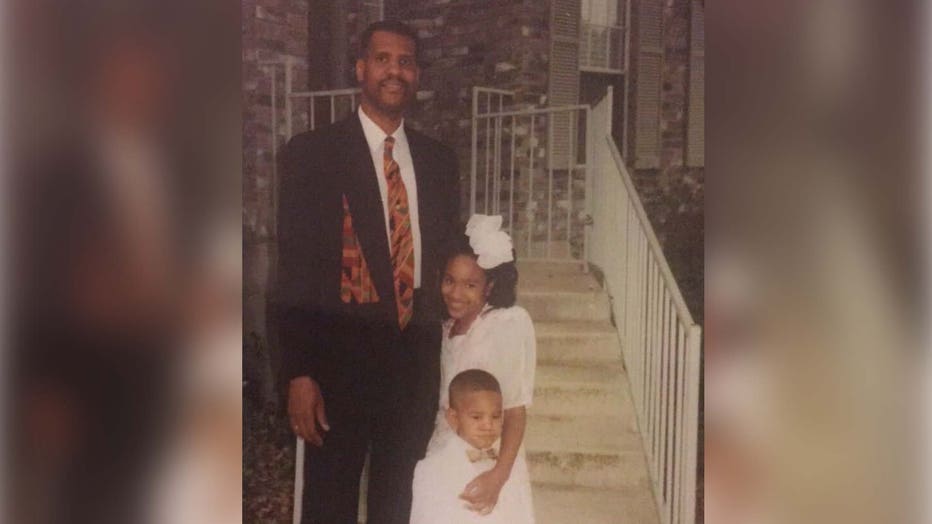
Detroit, you have watched me grow up. A girl from Atlanta became a Detroit woman in front of you.
You have watched me laugh so hard on television that I couldn't finish a sentence. You've watched me make mistakes. You've celebrated birthdays with me. You've watched me survive COVID. You've watched my career change, my life change and, Lord knows, you've watched me change hairstyles more times than any reasonable human being should.
But this year was different. This year, you saw me hurting.
And instead of looking away, you wrapped your arms around me.
You checked on me. You prayed for me. You told me about your people. You gave me permission to hurt without requiring me to hurry up and become the version of Maurielle you were accustomed to seeing every morning.
Detroit has embraced me in a way I could never have imagined when I first arrived here.
I've always said I love this city. This year, I understood just how much this city loves me back.
That's something I will carry for the rest of my life.
So now that I'm back on television, yes, I will laugh. I will probably say something ridiculous. There will certainly be another hairstyle. And there will be joy. Real joy.
But there will also be a woman standing there who understands something she didn't understand before.
You can be grateful and grieving.
You can be healing and hurting.
You can laugh without betraying the person you lost.
You can have a good day without being "over it."
And you can come back without pretending you were never broken open in the first place.
I don't think returning to work means this chapter is finished.
I think it means I am strong enough to turn the page while still honoring everything written on the ones before it.
To every person who wrote to me, prayed for me, shared your own story, defended my need for time or simply noticed I was gone: Thank you.
You may have thought you were sending a message to someone you watch on television.
But during the hardest season of my life, those messages reached a real woman on the other side of the screen. I felt them. I needed them. And I will never forget them.
It's good to be back, Detroit.
— Maurielle Lue