

Dermatologist's advice for teen acne - start simple treatments (and don't pop them!)

A dermatologist talks teen acne - how to treat it and what to do if it escalates
Dr. Steven Grekin explains treatment needs to start out simple.
FOX 2 - Acne for most of us, is part of adolescence. It can be a nuisance, or it can really be emotionally traumatizing.
It can be tempting for teens to overdo treatment, but the doctor says start simple.
Big picture view:
Dermatologist Steven Grekin says you can't really blame a teenage diet for pimples. At it's core, it's usually connected to hormones causing oil production where bacteria thrives.
"Acne is really a problem of plugged up pores," he said.
Doctor Grekin says start simple with a gentle cleanser.
"A nice detergent cleanser, what I mean by that is, not a medicated cleanser, definitely not a cleanser with those little beads or those scrubby things because those cause microscopic tears that allows even more bacteria to get in," he said.
Next, use an alcohol-free toner.
"No alcohol, I don't like the alcohol-based toners," he said. "And then we need a sunscreen in the morning if we're going to be out, mineral-based, or a light moisturizer, non-comenigenic, that means with no plugging ingredients."
So that's the start of the day. At the end of the day - after the cleanser and toner, you're doing something to treat the skin depending on what the problem is.
"If you have pustules, those whiteheads that look like big, ugly, nasty, red pimples, those could use Benzoly peroxide, that will work best," he said. "If you see, like, black heads and plugged up pores, those need retinoids."
He says there are over-the-counter versions of both, which is a good place to start.
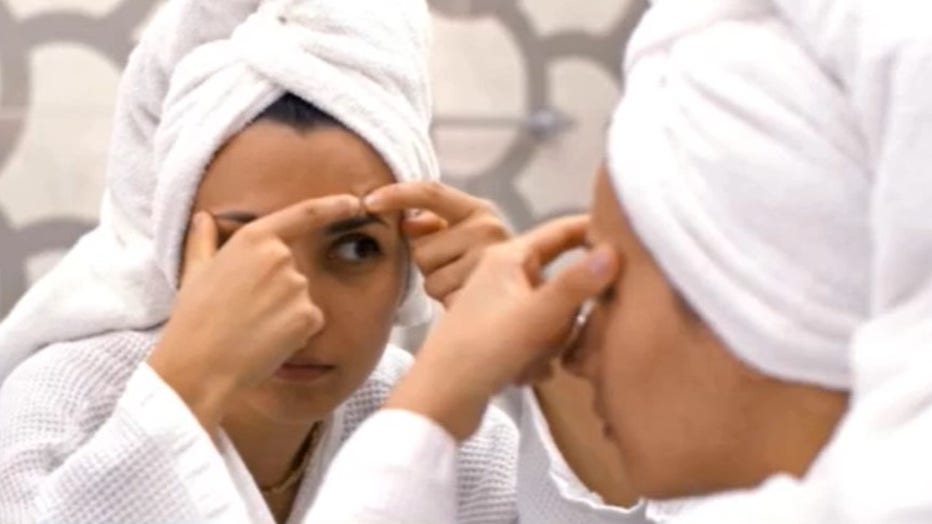
And kids, it needs to be said, don't pick your face.
"If you get one of those great big, puss-filled white heads - put a big dab of Benzoly peroxide right on it," Dr. Grekin said. "Please don't pop them. My joke is I'm the only licensed pimple popper in the room when we're treating the patient.
"And we do it in a way, and we do it in a way where we don't want to encourage scarring."
Remember if over-the-counter products are not working, you want to go see the dermatologist, because they can come up with a stronger system.
Treatment might even require medication from the dermatologist - because what you don't want is acne scars.
The Source: Information for this report comes from Dr. Steven Grekin.