

Invasive Stiltgrass discoveries in Michigan requiring chemical treatment for removal
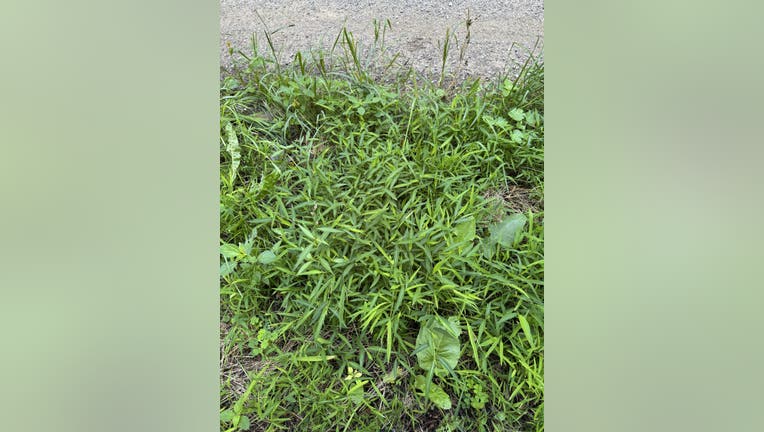
A patch of invasive stiltgrass detected in Barry State Game Area in a road right-of-way.
(FOX 2) - The latest invasive species that Michigan wants the public looking out for has no problem spreading around the state.
A single plant can drop a thousand seeds, will grow in most conditions, and even Michigan's most voracious herbivores won't feed on it.
Big picture view:
Two discoveries in August have invasive species specialists in Michigan calling on the public to be on the lookout for a highly intrusive grass capable of spreading a thousand seeds and growing in almost any soil.
Invasive Stiltgrass had already established itself in parts of the Lower Peninsula when it was first discovered in 2017 on private property in Washtenaw County.
That infestation was much bigger than originally believed, triggering a response from state officials working to cut back on the hardy grass.
This year, two biologists confirmed three more infestations in state game areas within the state's southern counties.
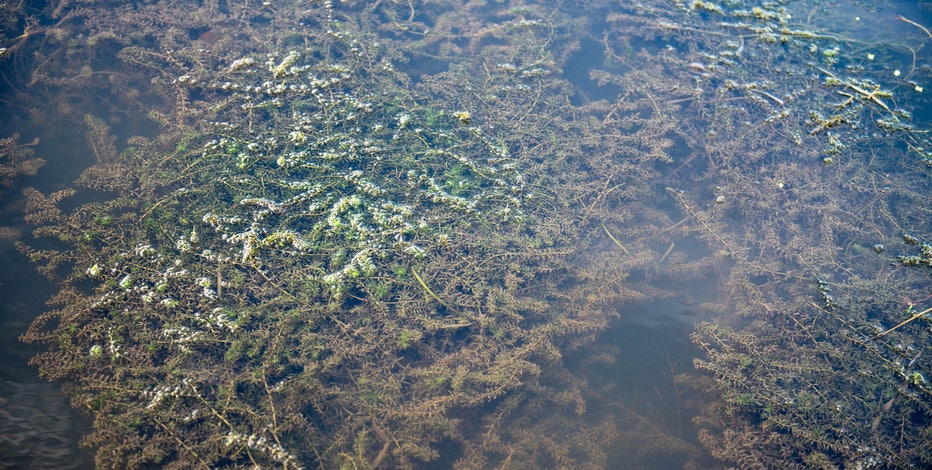
Invasive hydrilla in Southwest Michigan ponds required massive removal effort
An ominous warning about the world's most invasive aquatic plant was given after Michigan plunged manpower, money, and more removing hydrilla: "It will come back"
Dig deeper:
According to the Department of Natural Resources, stiltgrass - also sometimes called Nepalese browntop and Japanese stiltgrass - was found at the Petersburg State Game Area in Monroe County and the Barry State Game Area in Southwest Michigan.
A third discovery was made later in August at the Augusta Creek State Game Area in Kalamazoo County.
Officials ripped out the first nonnative plant and sprayed chemicals on the other two to push back on the infestations. Future monitoring will be done to ensure they don't return.
Identifying Stiltgrass
For the past eight years, the DNR has worked to isolate cases of stiltgrass and remove them. The original infestation along the Huron River near Ann Arbor served as the first case for a partnership to tackle the plant species.
The site it was found matches the kind of variability that stiltgrass can thrive in, despite the sometimes challenging conditions they pose. That includes different kinds of soil, moisture, and light.
Typically, stiltgrass will be found on forest edges, roadways, trails, and river corridors because it prefers disturbed soil.
A single plant has no problem dropping 1,000 seeds while avoiding some foragers like deer, which don't feed on the plant. That allows it to spread rapidly in areas where deer do eat, taking over space from native plants.
The plant looks similar to other native plants like smartweeds, whitegrass, and northern shorthusk. Here's how to tell if someone has found this species:
- A thin, bamboo-like grass with jointed stems and well-spaced leaves.
- Smooth green leaves 2 to 3 inches long and one-half inch wide, tapering to points at both ends, often with an off-center silver stripe or mid-rib.
- 1- to 3-foot-high beds of grass, with some stems running across the ground and others shooting upright.
- Roots, both at the base and stem joints, that are weakly attached to the soil and easy to pull up.
- One to three slender, green flower spikes at the stem tips, appearing in August or September.
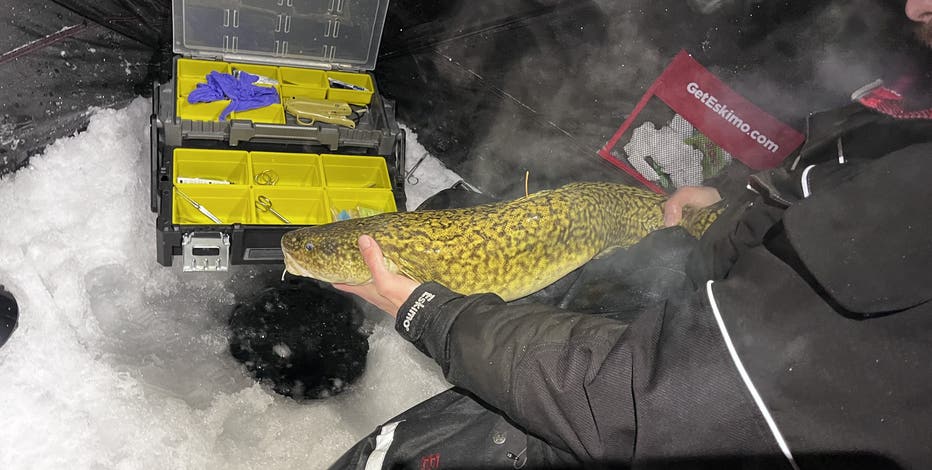
Wildlife regulators approve burbot catch limits in Michigan
Burbot fishing has grown in popularity recently. But so have the pressures on the species as invasive mussels continue to spread around their habitat.
The Source: The Michigan DNR and previous reporting was cited for this story.