

Kirtland's warbler numbers continue falling amid mounting habitat and wildlife pressures
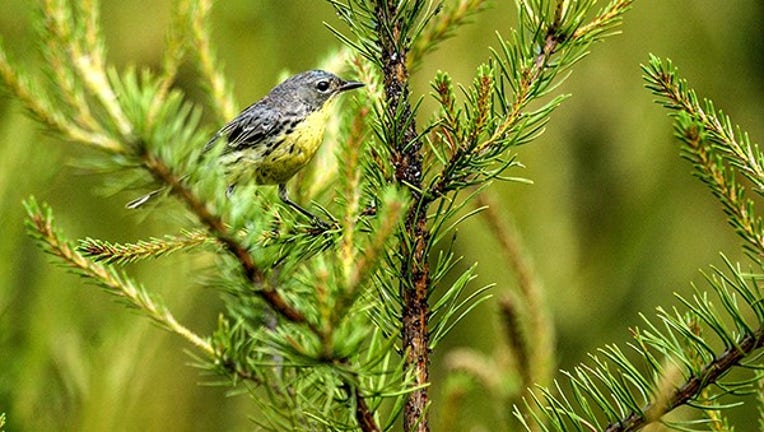
(FOX 2) - A beloved bird species with particular tastes for habitat is struggling to survive in Michigan.
Mounting environmental and wildlife pressures have led to drops in the Kirtland's warbler population in Michigan.
Big picture view:
The latest census of the Kirtland's Warbler reveals the threatened bird species continues to struggle amid habitat loss and extreme weather.
A 2025 survey of the songbird species notes the vast majority number of breeding pairs living in Michigan is on the decline, with 1,477 recorded in Michigan. Another 12 pairs were counted in Wisconsin.
The 2021 survey recorded 2,245 pairs.
Michigan is home to 98% of the global population of Kirtland's warblers.
While the population decline is indicative of bigger problems facing the species, experts note the survey has helped better identify what is driving their falling numbers.
By the numbers:
The Michigan survey was conducted June 6-26 in the northern Lower Peninsula and Upper Peninsula. The census resulted in:
- 814 pairs of Kirtland’s warblers on DNR-managed land in the northern Lower Peninsula.
- 597 pairs on Forest Service land in the northern Lower Peninsula.
- 49 pairs on DNR-managed land in the Upper Peninsula.
- 17 pairs on Forest Service land in the Upper Peninsula
- Another 12 pairs live in Wisconsin, while results from the census in Ontario, Canada have not been published. In 2021, there were 22 pairs living in the province.
The backstory:
The native warblers are a sensitive species and selective about their habitat.
They nest exclusively on the ground, choosing young jack pine forests to breed. The bird prefers jack pine trees that are between 6-20 years old. The tree species is drought-tolerant, but mostly spreads with the help of the heat from wildfires.
However, the reduced acreage of habitat with that kind of jack pine has limited where the warbler can breed.
Kirtland's warbler was federally endangered for nearly 50 years after its population dropped to below 200 pairs in the 1970s and 1980s. It took a herculean effort from state management groups to get the number back up.
It was removed from the list in 2019. However, the species is still threatened and relies on conservation goals from the state to exist. The majority of the population lives across 10 counties in the northern Lower Peninsula.
Saving the Kirtland's Warbler
In addition to declining habitat, extreme weather is also making it harder for the species.
The state management coordinator for the warbler said a 2023 hail storm killed half of the jack pine seedlings that the DNR had contracted to plant for the purpose of conservation.
Additionally, hurricane season during the bird's migration season can kill the birds. Fewer numbers return to Northern Michigan the following year after a devastating hurricane.
Another stressor is the cowbird - a bird species that lays its eggs in other nests that unsuspecting birds will feed, unaware of the foreign chicks living in the nest. The cowbirds can out-compete warblers for food, leading them to die.
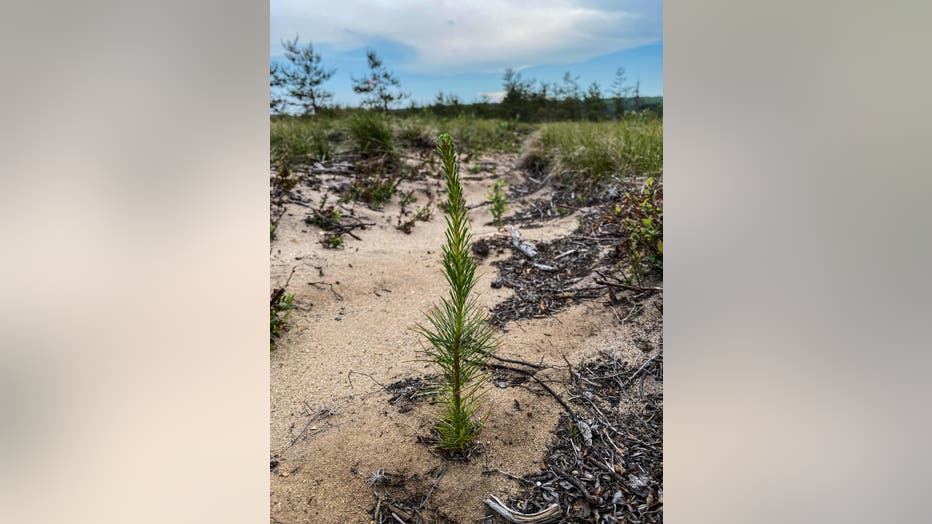
A jack pine seedling planted by the DNR to hopefully serve as future habitat for the songbird species.
Dig deeper:
A partnership made up of the DNR, U.S. Fish and Wildlife Service, U.S. Forest Service, and other out-of-state groups are developing a 10-year plan for ramping up construction of the breeding range.
The plan requires cutting jack pine that are 20 years or older and planting new ones in their place. Land managers are also exploring using prescribed fire use to help the tree species naturally spread.
Meanwhile, the timber from the trees cut down are sold back into the market.
"This strategy continues to create habitat and also allows the 40-year age class to continue growing and become merchantable. If we kept trying to harvest from the 40-year age class we would be perpetuating the problem," said Jason Hartman, a specialist for the Michigan DNR.
The Source: A news release from the Department of Natural Resources was cited for this story.