

Supreme Court hears arguments over whether President Trump overstepped his authority to impose tariffs
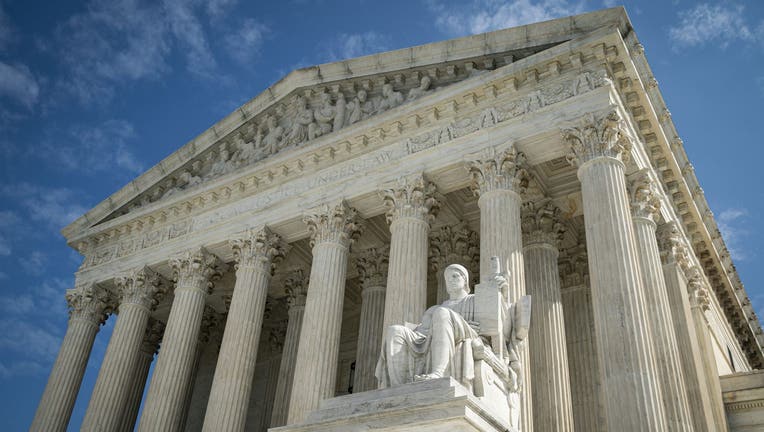
U.S. Supreme Court. (Credit: Al Drago/Getty Images)
WASHINGTON - The Supreme Court heard arguments Wednesday on whether President Donald Trump has overstepped federal law with many of his tariffs.
A ruling against him could limit or even take away that swift and blunt leverage that much of his foreign policy has relied on.
Conservative Supreme Court justices appear skeptical of Trump's tariffs
Key Supreme Court conservatives seemed skeptical Wednesday that President Donald Trump has the power to unilaterally impose far-reaching tariffs, potentially putting at risk a key part of his agenda in the biggest legal test yet of his unprecedented presidency.
The Trump administration says the law gives the president the power to regulate importations, including tariffs, which are central to Trump's economic agenda. The case made its way to the Supreme Court after lower courts ruled the emergency law he invoked doesn’t give him near-limitless power to set and change duties on imports.
The Constitution says Congress has the power to levy tariffs. But the Trump administration argues that, in emergency situations, the president can regulate importation — and that includes tariffs.
Justice Amy Coney Barrett grilled the government on that point. "Has there ever been another instance in which a statute has used that language to confer the power?" she asked.
Justice Neil Gorsuch also questioned whether Trump’s position would hand too much congressional power to the president. "Is the constitutional assignment of the taxing power to Congress, the power to reach into the pockets of the American people, just different?" he asked. "And it’s been different since the founding?"
Questions from Chief Justice John Roberts also suggested he might not be convinced. With the court's three liberal-leaning justices seeming deeply dubious, the tariff challengers could win by swaying two conservatives.
A decision in this case could take weeks or months.
Three lawyers who presented arguments to the court
Solicitor General D. John Sauer, Trump’s top Supreme Court lawyer, is defending the tariffs.
Neal Katyal, who held Sauer’s job on an acting basis in the Obama administration, represents small businesses that are challenging the tariffs.
Oregon Solicitor General Benjamin Gutman is appearing on behalf of 12 mostly Democratic-led states that also sued over the tariffs.
Tariffs
Big picture view:
Trump increasingly has expressed agitation and anxiety about the looming decision in a case he says is one of the most important in U.S. history.
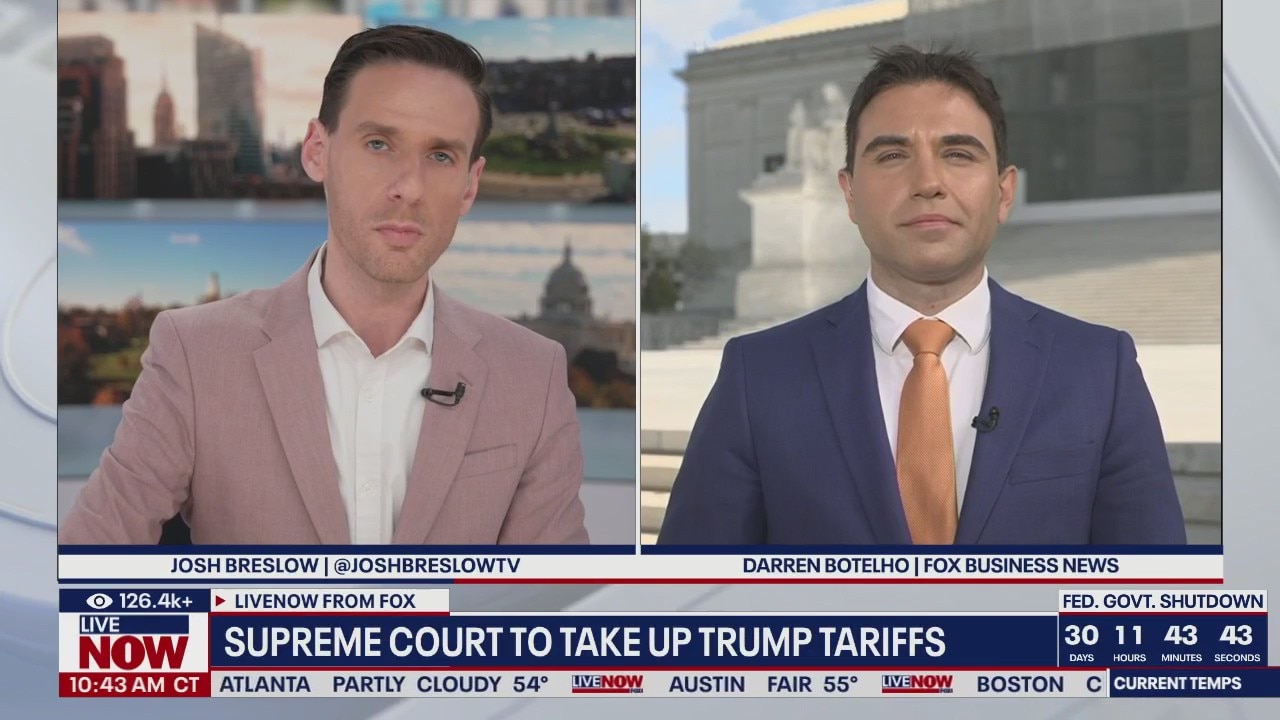
Supreme Court to take up Trump tariffs
The Supreme Court will hear arguments on President Trump's tariffs. FOX Business News reporter Darren Botelho joins LiveNOW from FOX's Josh Breslow to discuss the latest.
Dig deeper:
The case involves two sets of import taxes, both of which Trump justified by declaring a national emergency: the tariffs first announced in April and the ones from February on imports from Canada, China and Mexico.
RELATED: Trump slaps extra 10% tariff on Canada after Ontario airs anti-tariff ad
Trump on April 2 — Liberation Day, he called it — imposed so-called reciprocal tariffs of up to 50% on countries with which the United States runs a trade deficit and 10% baseline tariffs on almost everybody else.
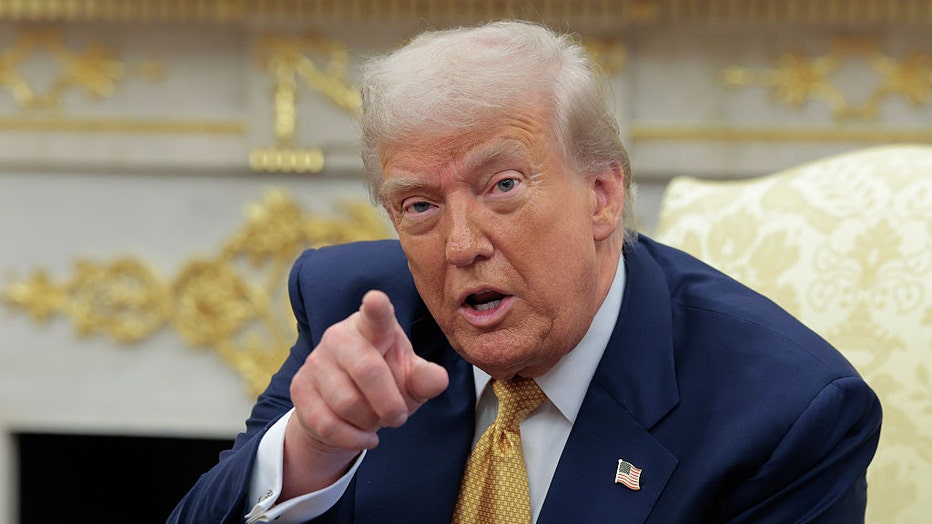
U.S. President Donald Trump. (Photo by Chip Somodevilla/Getty Images)
The president later suspended the reciprocal tariffs for 90 days to give countries time to negotiate trade agreements with the United States — and reduce their barriers to American exports. Some of them did — including the United Kingdom, Japan and the European Union — and agreed to lopsided deals with Trump to avoid even bigger tariffs.
RELATED: Trump enforcing new 25% tariff on medium and heavy-duty trucks
In February, he’d invoked the law to impose tariffs on Canada, Mexico and China, saying that the illegal flow of immigrants and drugs across the U.S. border amounted to a national emergency and that the three countries needed to do more to stop it.

Trump to cut tariffs on China after meeting with Xi
President Donald Trump met with Chinese leader Xi Jinping and told reporters that he would cut tariffs on China. President Trump also told reporters he could sign a trade deal with China "pretty soon." LiveNOW’s Austin Westfall is learning more tonight about current relations between China and the United States with Dave Hebert, Ph.D, a senior research fellow at AIER.
Why you should care:
The case will come before a court that has been reluctant to check Trump’s extraordinary flex of executive power. One big question is whether the justices’ own expansive view of presidential authority allows for Trump’s tariffs without the explicit approval of Congress, which the Constitution endows with the power to levy tariffs.
RELATED: Trump to put tariffs on pharmaceuticals, furniture, heavy trucks
Three of the justices on the conservative-majority court were nominated by Trump in his first term.

US budget deficit climbs despite tariff revenue
The US budget deficit in July climbed 20% this fiscal year compared to the last despite the US taking in record income from President Donald Trump’s tariffs, according to Treasury Department data. The data showed the US saw a 273% increase — or $21 billion — in customs revenue in July over the same period last year. Edward Lawrence with Fox Business Network joined LiveNOW's Mike Pache to break it down.
What has Trump said about the tariffs?
What they're saying:
Trump previously said he was acting to bring in hundreds of billions in new revenue to the U.S. government and restore fairness to global trade.
"Taxpayers have been ripped off for more than 50 years," he said. "But it is not going to happen anymore."
RELATED: Treasury chief says US could issue refunds if court strikes down Trump tariffs
The other side:
The small businesses and states that challenged the tariffs said Trump’s import taxes on goods from almost every country in the world have nearly driven their businesses to bankruptcy.
"Congress, not the President alone, has the power to impose tariffs," attorney Jeffrey Schwab with the Liberty Justice Center said.

SCOTUS says it will weigh in on Trump's tariffs
An unusually fast hearing on President Donald Trump's sweeping tariffs has been granted by the U.S. Supreme Court. This places one of the President’s central economic policies directly before the highest court in the nation. LiveNOW's Andy Mac is getting you the latest from the nation’s capital.
How did tariffs end up at the Supreme Court?
The backstory:
Trump imposed two sets of tariffs, determining that sustained trade deficits had brought the United States to "the precipice of an economic and national-security crisis" and that hundreds of thousands of deaths from imported fentanyl had created a crisis of its own, the administration told the justices.
Until this year, no president had used the International Emergency Economic Powers Act to impose tariffs since its enactment in 1977.
The law makes no mention of tariffs, taxes, duties or other similar words, although it does allow the president, after he declares an emergency, to regulate the importation of "any property in which any foreign country or a national thereof has any interest."
RELATED: Here's who would get refunds if Trump's tariffs get thrown out
Earlier this year, two lower courts and most judges on the U.S. Court of Appeals for the Federal Circuit found that Trump did not have power under the International Emergency Economic Powers Act, or IEEPA, to set tariffs — a power the Constitution grants to Congress. Some dissenting judges on the court, though, said the 1977 law allows the president to regulate imports during emergencies without specific limitations.
The courts left the tariffs in place while the Supreme Court considers the issue. Meanwhile, Trump has continued to wield them as he has tried to pressure or punish other countries on matters related — and unrelated – to trade.
The Source: The Associated Press contributed to this report. The information in this story comes from court filings, statements by President Trump and his administration, comments from attorneys challenging the tariffs, and summaries of previous lower-court rulings. This story was reported from Los Angeles.