

Cold winter temps means lower tire pressure - what you need to know

Winter tire pressure tip - you want to check it, and fill it
Colder temperatures means your tire pressure is probably dropping. Derek Kevra gives us a science lesson why - and what we can do.
FOX 2 - When the temperature gets cold, Derek Kevra thinks of thermo dynamics.
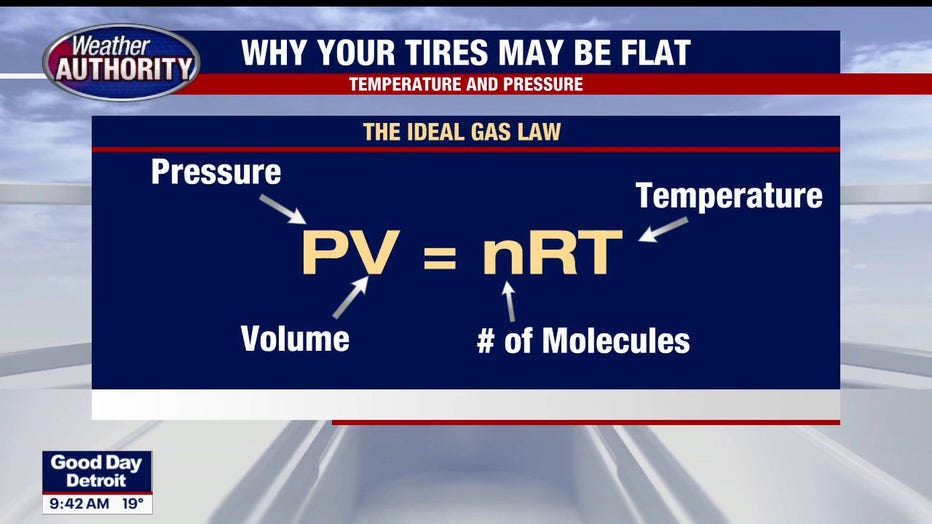
No, really. We're talking tires on your car. It means when the temperature falls - the pressure falls.
Dig deeper:
That might mean if you are getting a warning about low tire pressure from your vehicle. This exact thing happened to Derek recently.
We talked to Kenny the car guy about it a couple years ago and he explained it.
"Every 10 degrees of temperature drop, it is going to reduce your tire pressure by one PSI," he said.
We are at a 40 degree drop from where we were
Cars have, inside the driver side door frame, tire information on a sticker. All cars are a little different - for example on a FOX 2 Ford Explorer, it says 36 PSI.
Depending on the car, sometimes the front is different from the back.
What you can do:
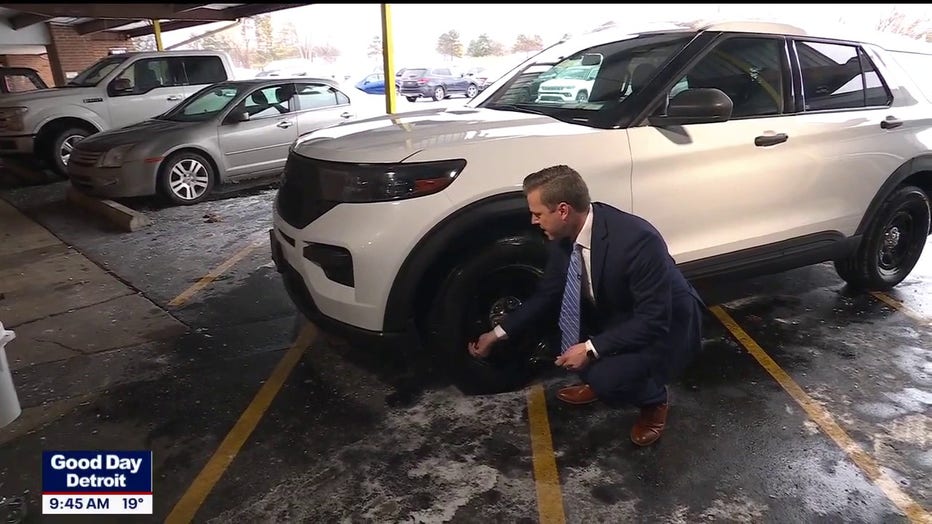
Most newer cars do have tire pressure sensors, but it is a good idea to also have an old school tire pressure gauge that fits on the stem (after twisting off the cap) to manually take a look at it.
Ideally, you want to check a couple times just to make sure.
Also - if you have a sensor that gives you information on the PSI already, you still might want to check both using a gauge the old fashioned way and by looking at your internal car display.
Sometimes, the reading updates from the sensor slower than the real-time PSI. So you may want to look at both.
Kevra went out to the garage and saw that the Explorer was showing that it was a little low with a tire pressure of 30 PSI.
Gas stations usually have air pumps for free, but it may cost a few quarters. Then, check it again. But don't fill them too high.
If you do, let a little out. And do the same when temperatures go back up.
Having good tire pressure is good for better traction on the ground and fuel economy.
The Source: Derek Kevra and Kenny the car guy, an auto expert.