

Expert says artificial intelligence creates opportunities in job market
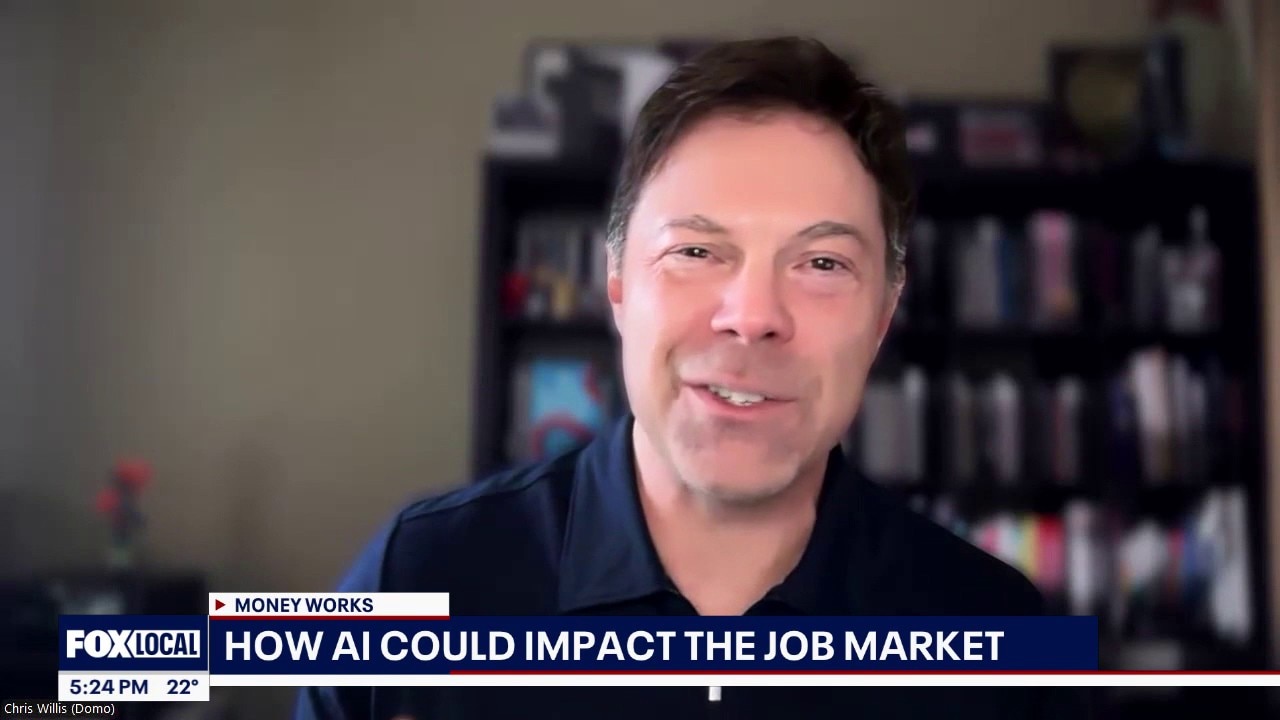
Expert reveals strategy for safe-proofing job skills against AI
Workers shouldn't look to compete with AI, but rather remain curious and be familiar with the technology.
FOX 2 - When it comes to artificial intelligence, there is a lot of concern on both ends, from the employer's perspective and from the employee.
Big picture view:
Technology is evolving faster than anything we've seen before. But according to one person who's worked with AI for nearly a decade, one advantage that humans have over machines is judgment.
He sees a world where quality will make us more valuable than artificial intelligence on its own. By now you know, AI isn't going away. So what can we do to make sure we have jobs that work with the technology?
"It has to be a proactive approach," said Chris Willis. "It has to be something that, especially living in Detroit, not immune from technological change in the auto industry and others. This is no different, but it's happening at a scale in a speed, as you mentioned, that is unparalleled."
Willis has always been a pioneer. After co-founding the iconic Hour Detroit magazine, he was able to see the future of sorts.
Fifteen years ago, Willis left that magazine for a company called Domo, a business that was exploring something rather unknown at the time, artificial intelligence.
"What we really focus on, is helping organizations pull together all of their information and all of the people, so that AI is not guessing," Willis said. "Without the right information, AI is just kind of an expensive roll of the dice. And so I'm lucky in that I helped sort of design, not just the platform for doing this, but a lot of the applications that many very large organizations use to change their business using AI and data and people together."
It's that last part, AI and people, which continues to be a major puzzle. He points to something Sam Altman, the founder of ChatGPT, recently said when asked about the pace at which AI is moving.
"He said he's never felt more behind, so if the top researchers and the people who are building these tools feel behind, it's really very reasonable to feel that way as well," Willis said.
While rapid development has challenges, it also provides opportunity. Willis says a lot of companies are seeing what he calls an AI hangover.
"Where they've gone all-in on AI, and maybe they've cut back some staff and maybe rethought what AI should be really good at, are now coming to the conclusion that AI is really great at generating things, but it's not great at judgment," he said.
Decision-making. That is where he says the workforce can set themselves apart.
"I think if you're good at delegating to people and you're good at breaking big problems into little problems, you're going to be good at AI," he said. "It's the same muscle."
Willis says success at a business level will likely come from collaboration.
"It's going to be human + AI, and I think it also requires a rethinking of what is human intelligence and how is it different than AI intelligence," Willis said.
He indicates now is the time to lean into your creative side, getting to know everything you can about artificial intelligence.
"It's going to require investigation and innovation. And I think that's something that a lot of organizations might not be great at," he said.
And when business owners learn where to use AI and where not to, that's where the real magic will happen. In the bottom line, he says, workers shouldn't try to necessarily compete with AI, rather fill in the blanks.
The best way to do that is get familiar with the tech and always remain curious, a real trait that currently sets humans apart from the machines, at least for now.
The Source: Information for this report is from an interview with Chris Willis.