

Have you been Flocked? How to check if your license plate is in audit logs
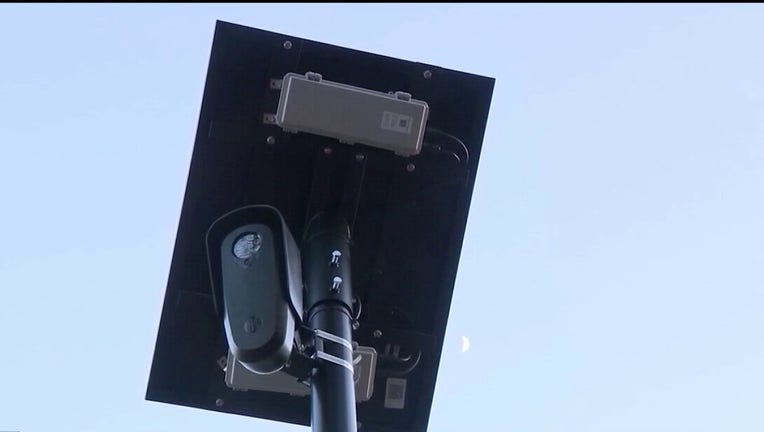
A website lets users know if their license plate is included in audit records of searches connected to Automatic License Plate Recognition cameras.
The backstory:
Haveibeenflocked.com allows users to search their license plates to see if legal authorities have used the high-tech AI tool on their vehicle.
The website displays search results from audit logs obtained through public records requests.
Police say the cameras help solve crimes and find missing people. License plate reader cameras or LPRs include the most popular brand, Flock, and are being used in numerous cities and counties in Michigan.
What are the Flock results from?
What they're saying:
"These results are records of searches performed by Flock's customers. The license plates and search reasons are what someone manually entered into the system.
"The results don't show when or if your vehicle passed one of Flock's estimated 120,000+ cameras and connected devices, or what those devices returned."
The dataset is incomplete, it says, because the most recent results on the site are from July 31, 2026.
What if your vehicle was ‘Flocked?’
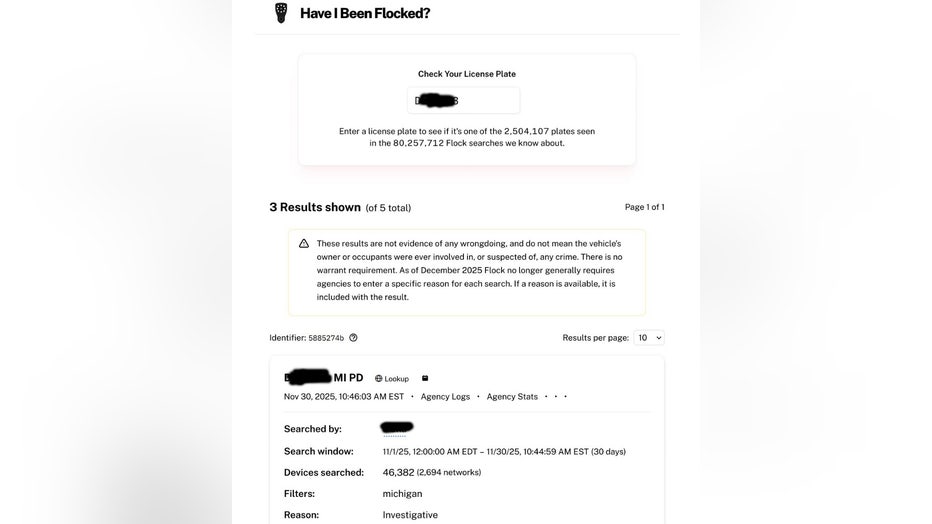
Redactions made to preserve privacy of a result shared to Facebook.
Why you should care:
No need to panic if your plate comes up "Flocked." There is a disclaimer on the search result that it isn't because the driver or passengers are suspected of crimes.
A search result means someone on the Flock system searched the database for your license plate using the Flock application.
Dig deeper:
The person doing the search is not necessarily a police officer, and a search does not imply you were stopped or investigated. Search policies vary, but many police agencies do not require a warrant or even suspicion to perform a search.
There is no warrant requirement for a police officer to use Flock on a vehicle.
"As of December 2025 Flock no longer requires agencies to enter a specific reason for each search," the site said. "If a reason is available, it is included with the result."
If there is a result, the officer's first name initial and first letters of their last name is listed next to "searched by."
Then a search window is provided, spanning 30 days where the ALPR may have been used.
It lists the number of devices searched, the filter (or state network) and the reason, which is almost always going to read "investigative."
The website says it does not store the license plate searches.
"No. This website does not save, store, or log the license plate numbers or search terms you enter," a message says. "The search is performed and the data is immediately discarded by the application itself."
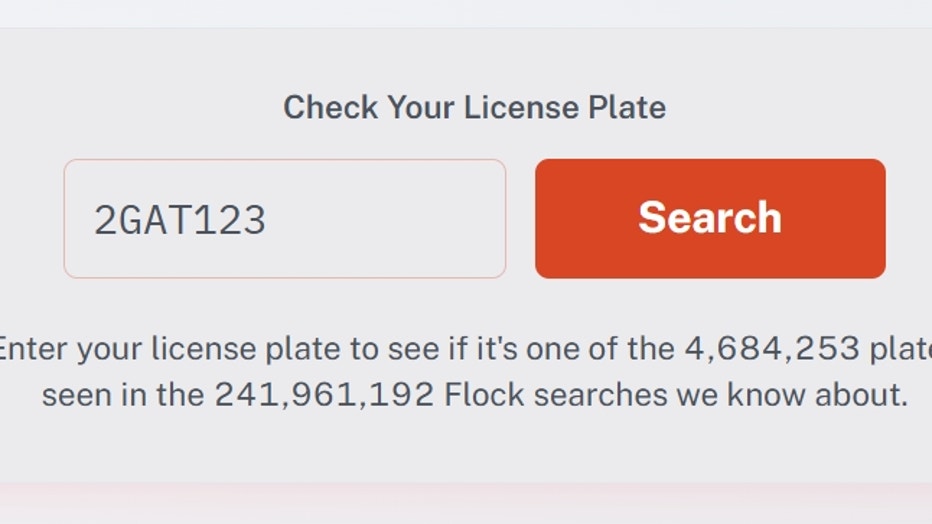
screen shot from haveibeenflocked.com
How do Flock cameras work?
Photos are snapped of every passing vehicle, while artificial intelligence then catalogs the state license plate, plate number, vehicle make, model, color and records unique appearance details. This could mean dents.
AI extracts the plate number, state, vehicle make, model, color, and specific traits like dents. When vehicle descriptions are reported, the information is cross-checked by AI which results in a "hit" for investigators.
"Our goal was to leverage technology to help maintain the highest standards of safety and security for our community," police said in a statement. "While the national debate over technology in policing—ranging from ALPRs to drones—has sparked passionate views, our focus remains local."
Flock privacy concerns
What they're saying:
There have been posts online claiming harassment by police departments using flock.
One argument is that authorities could misuse the system for stalking and harassing innocent people.
One comparison that has been made, are the rare reports of the LEIN system used to look up license plates when not related to a traffic stop or investigation.
Police say that the cameras are not used for traffic enforcement, they do not take photos of the vehicle's occupants and there is no facial recognition technology.
Despite the reassurances that the cameras don't capture faces, the technology has led to additional worries about how data is being stored, and concerns about the surveillance of innocent people.
Pushback against license plate readers
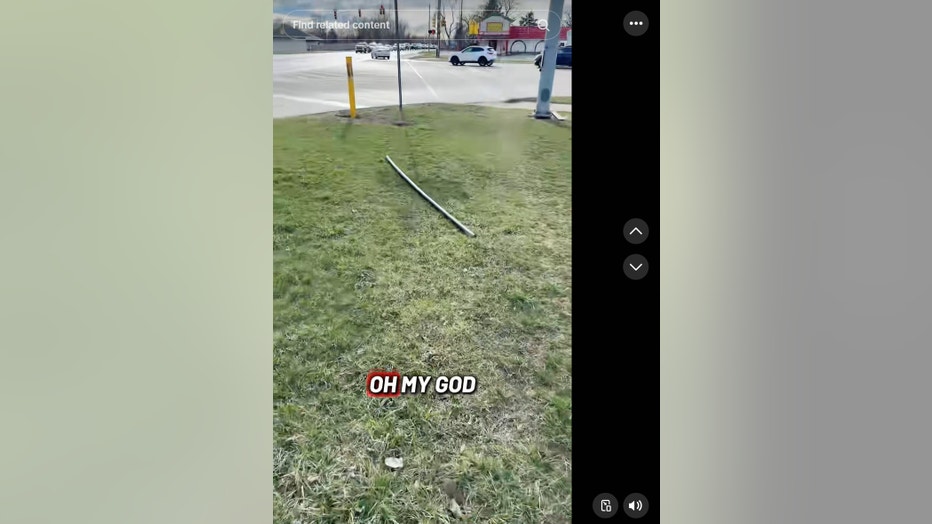
Screenshot from TikTok account @DebateHer.
Arguments against Flock:
In some case, license plate reading cameras and the polls they are affixed to, have been vandalized.
They have been shot, spray-painted and cut-down as how-to videos have spread online.
Oakland County officials say people are damaging or disabling cameras in several communities, including:
- Birmingham
- Novi
- Pontiac
- Waterford
- West Bloomfield
Last month, two cameras were damaged in Novi while West Bloomfield has seen repeated vandalism at some locations.
In Waterford, several cameras were ripped from their mounts and smashed back in February, leading to felony charges against a Clarkston man.
Numerous websites have emerged in the past couple of years revealing locations of Flock cameras. Sites like DeFlock and Flock Hopper have grown in popularity.
The demand for the sites is fueled by concerns over surveillance and personal information protection, among other issues.
A message on Flock Hopper claims, "Plan routes that avoid Flock and ALPR cameras. Explore 90,000+ surveillance cameras and build privacy-first routes across the United States."
Flock crime-fighting
The other side:
Sterling Heights police say Flock cameras helped in the arrest of a shooting suspect Friday morning.
Officers responded to a shooting of an 18-year-old in the area of Eastbound Hall Road near Schoenherr at 5:36 a.m.
"Due to the quick response by multiple police agencies, witness information, Flock automated license plate reader technology, and the diligent work by Sterling Heights Police, a subject was taken into custody less than three hours after the incident," said a statement released by police.
Ferndale officials credited Flock cameras with helping solve several big crimes, namely a murder in the city and a double murder in neighboring Hazel Park.
In May, an armed carjack suspect wanted in Lake Orion was tracked down in part, due to license plate reader cameras which indicated the suspect's vehicle was heading northbound, then flooded that area with support.
Oakland County Sheriff Michael Bouchard credited the hit that the roadside cameras produced with being able to locate and flood the area with police and taking the suspect off the streets sooner.
Saying no to Flock
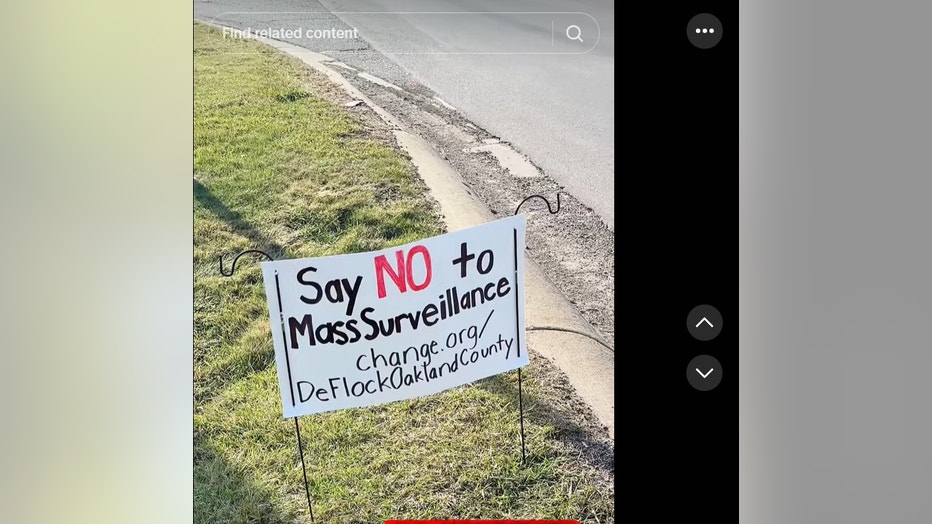
Screenshot from TikTok account @DebateHer.
Local perspective:
Westland and Sumpter Township both recently ended agreements with Flock after receiving community feedback.
Sumpter Township Police Department announced it has canceled the agreement it had with Flock, effective immediately after "careful consideration of public feedback."
Westland Flock cameras are coming down this month after the police department decided to end the program.
Last month a Westland council member posted that the contract would not be brought forward for a renewal vote by Chief of police Kyle Dawley.
In Ferndale, residents pushed back on the Flock cameras and the city responded by severing its contract with the company in late 2025.
The Source: Information about Haveibeenflocked.com is from the website, while other elements of the story is from other reports.