

Moose collisions surging in northern Michigan: What's behind climbing numbers?
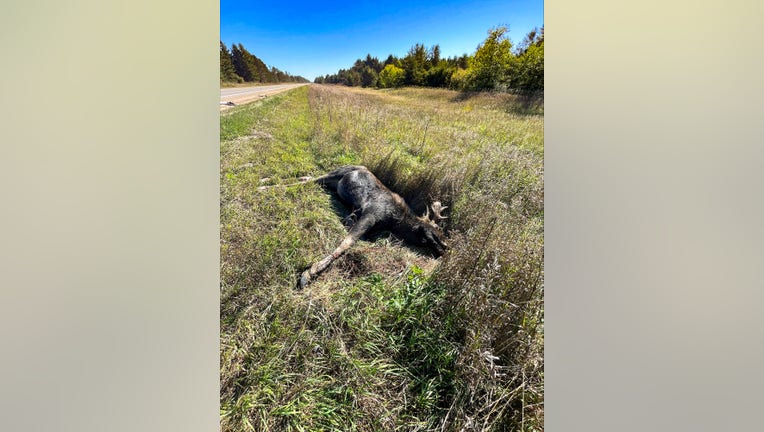
A dead bull moose is shown in the grass along an Upper Peninsula highway after a moose-vehicle crash. Photo via DNR.
(FOX 2) - Over the summer, a female moose crossing U.S. 141 in Michigan's western Upper Peninsula was hit and killed by a vehicle. The animal was raising two calves when it was fatally struck — likely removing all three from the population.
The case is one of 60 different instances of deadly vehicle-moose collisions over the past four years. Remarkably, no one has died after one of these collisions.
But it does add a wrinkle to Michigan's efforts to boost its moose numbers in the western UP, which have mysteriously remained stagnant for the past 20 years.
Moose-vehicle collisions
Data collected by MDOT and the DNR found September was the deadliest month for moose involved in vehicle collisions, followed by June, then October.
The fall and summer months are when the massive animals are most active, making the time risky for drivers — especially up north. The vast majority of the crashes happened on rural highways on the west side of Michigan's Upper Peninsula.
Since 1984, there have been 266 recorded cases of moose being hit by vehicles. However, the past four years have been the most deadly with 60 fatal crashes.

A bull moose photographed on a trail camera is shown from the core Michigan moose range in the western Upper Peninsula. Photo via DNR
Dig deeper:
The biggest reason behind the surge in collisions, according to the DNR, is the western UP moose herd's migration to the south. Seeking out better habitat, this has placed the moose population into southern Baraga County, eastern Iron County, and southwest Marquette County.
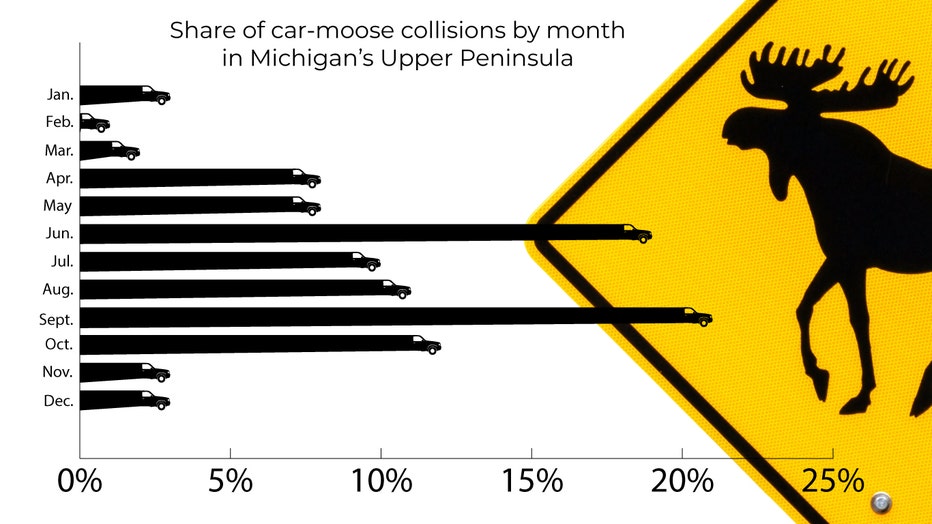
A graph shows months and the percentage of occurrence of moose-vehicle crashes in the Upper Peninsula. Photo via DNR.
The past 10–15 years have been particularly dangerous across those three regions, landing specifically on four different rural highways:
- U.S. Highway 41 between Nestoria and the M-28 intersection in eastern Baraga County. This 10-mile stretch of highway (55 mph) has seen 45 moose-vehicle collisions since 1984.
- U.S. Highway 141 between Amasa and Covington in northern Iron County and southern Baraga County. This 23-mile stretch of highway (speed limit 55/65 mph) has seen 37 collisions.
- M-95 between Republic and the U.S. Highway 41 intersection in southwest Marquette County. This 7-mile stretch of highway (55 mph) has seen 24 collisions.
- U.S. Highway 41 between Greenwood and the M-95 intersection in Marquette County. This 8-mile stretch of highway (55 mph) has seen 17 collisions.
Adding to the variables of preventing these crashes is efforts to put up moose-crossing signs being stymied because "those were frequently stolen," the DNR said, leading to a newer sign design that doesn't have the image of the moose.
Research also shows that drivers grow accustomed to these signs, which causes them to lose their effectiveness.
"Moose pose a unique crash hazard in the Upper Peninsula that isn’t seen in lower Michigan," said Alicia Sledge, director of the Michigan Office of Highway Safety Planning. "Residents and tourists driving in the Upper Peninsula should exercise caution when traveling in moose country.
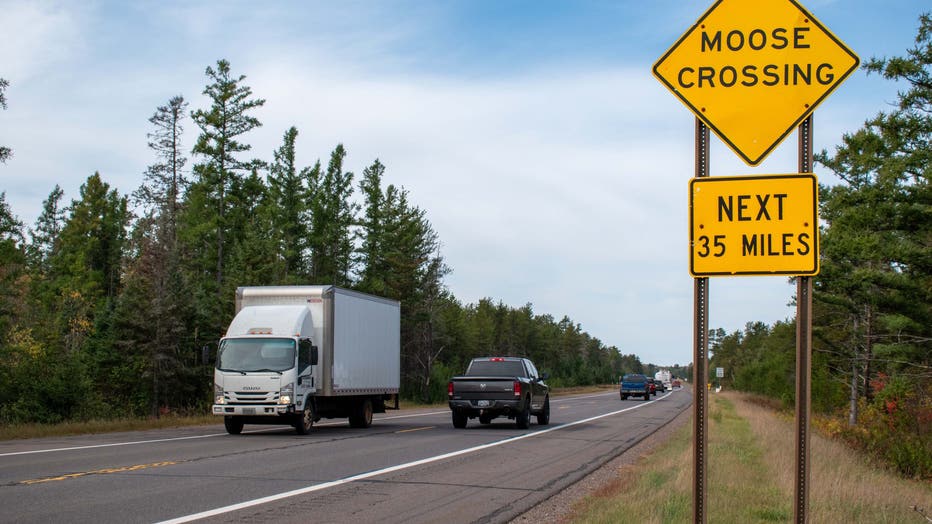
A moose crossing sign is shown along U.S. Highway 41 in Greenwood in Marquette County, one of the moose-vehicle crash hotspots in the Upper Peninsula. Photo via DNR.
Michigan's moose problem
The collisions are also adding another challenge to the state's conundrum it has spent years trying to solve: Michigan's moose population is not growing.
The state reintroduced moose in the 1980s with a goal of pushing their numbers over a thousand by 2000. But their numbers have been stagnant, barely reaching half that goal.
Potential factors as to why include predation, disease, and faltering habitat. While collisions with moose make up a small fraction of the total number roaming the Upper Peninsula, the ramifications could be large.
"We could have as many as 5% of our moose population hit and killed by vehicles in a given year," Tyler Petroelje, the DNR's wildlife research specialist said. "In that sense, it’s fairly significant when we’re thinking about factors that could limit moose population growth."
Some solutions to preventing more collisions include putting up fences along U.P. highways or even building a wildlife overpass.
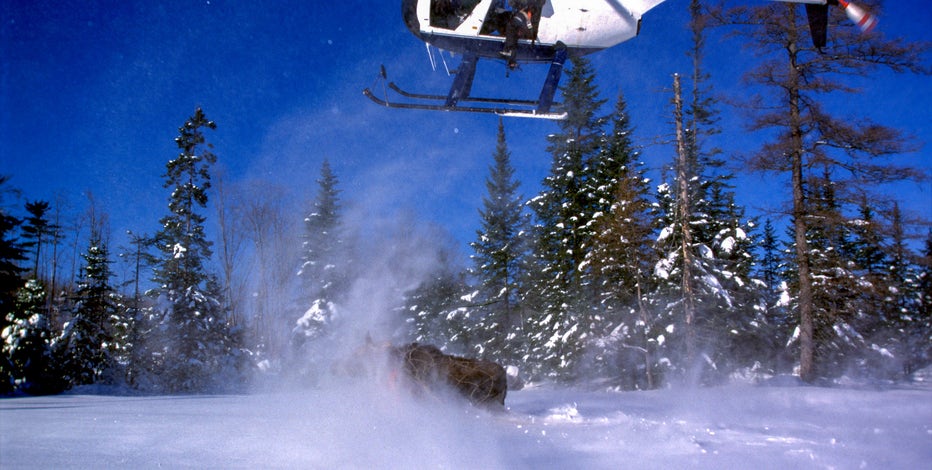
Moose study in Michigan UP will collar 60 individuals this February
Using spotter planes and helicopters, the Michigan DNR plans to track down 60 moose in hopes of boosting their numbers up north.
The Source: A news release from the DNR and previous reporting was cited for this story.