

When Michigan's leaves change color: Check the fall foliage map here
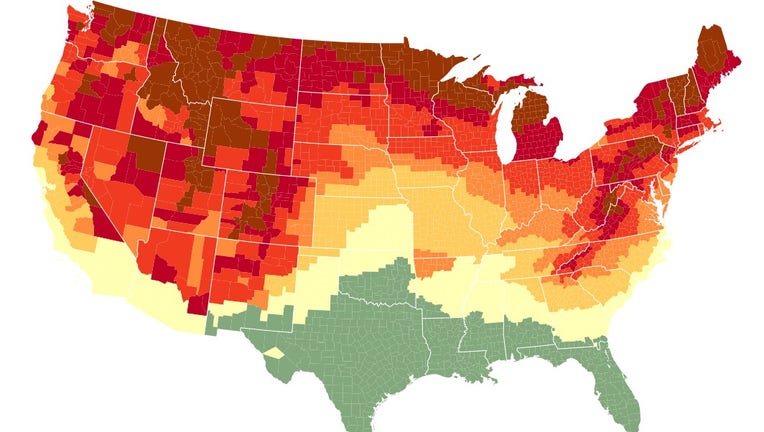
The fall foliage map according to Smokymountains.com. This prediction is for mid-October when half of Michigan is past peak color.
(FOX 2) - Temperatures have peaked and are on the way down, which means that some of the best weather of the year is incoming. Just check out the conditions expected this week.
But while Metro Detroit will be swimming in the low 80s and 70s this week, the seasons are already experiencing a more dramatic shift further north.
The Upper Peninsula and parts of the Lower Peninsula will already be showing off what's to come in the near future.
Fall colors in Michigan
Unless you were outside on the Keweenaw Peninsula last week, you likely avoided the first snow flakes this year — falling in a mixture of rain and snow following the arrival of a cold mass of air floating over Lake Superior.
For the rest of Michigan, trees are going to start changing color as autumn air and less sun start to dominate the days.
According to the fall foliage map that predicts when leaves lose their pigment, some of that shift is already happening. The fall foliage map on smokymountains.com is the best place to guess when and where that will happen.
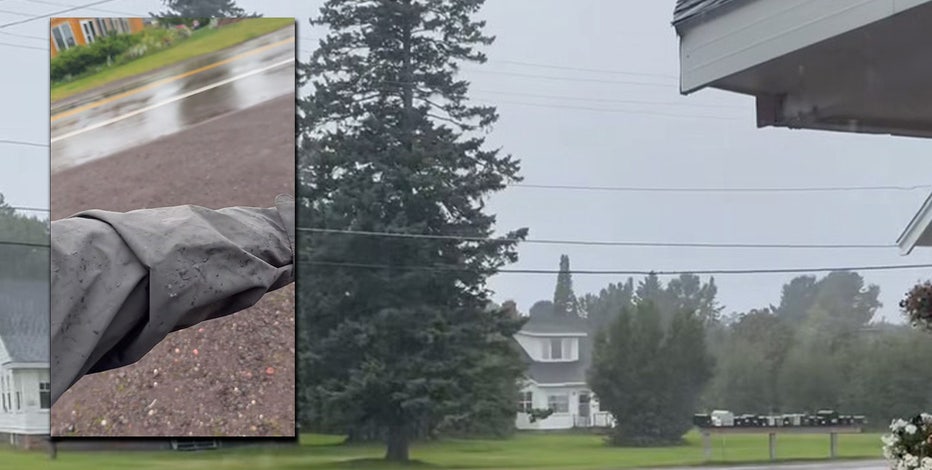
Snow in September? Michigan Upper Peninsula sees first flakes of the year
The flakes were spotted falling outside Fletchy’s Otter Belly Lodge in Eagle Harbor on Sept. 4.
Big picture view:
Based on the predictive map, this week is when the first changes are noticeable. By the end of September, the entire Upper Peninsula will be blooming yellows, oranges, and reds.
Those colors emerge for one reason: the mechanism that turns leaves green starts to slow down.
Called chlorophyll, this component is used by trees to turn sunlight into energy. It also turns the leaves green. As the days grow shorter and the temperatures begin to fall, this triggers trees to stop producing as much chlorophyll. As it disappears, the iconic colors like red, orange, and yellow start to form, depending on the proteins the tree species create.
Oranges are caused by beta-carotene, which is present in most leaves. It tends to absorb blue and green light, while reflecting red and yellow light.
Red colors come from the production of anthocyanins, which can help protect a leaf from falling temperatures. Yellow comes from flavonols, which are also present in the leaf, but only revealed when the chlorophyll disappears.
Best fall drives in Michigan
Lower Peninsula Drives
- M-22 runs along the far west Michigan coast and goes by several water bodies, including Portage Lake, Crystal Lake, and Glen Lake. It continues by Sleeping Bear Dunes and up the Leelanau Peninsula all the way to Northport.
- M-37 goes up Old Mission Peninsula, which is located in between each arm of Grand Traverse Bay. The drive ends at Mission Point Lighthouse.
- US-31 is another road that tracks along much of Michigan's west coast, extending beyond Traverse City up all the way to near Mackinaw City. It's the drive between those two cities that offers sights of Lake Michigan through a forested coastline with plenty to see.
- The Blue Star Highway is a memorial highway between South Haven and Holland and runs about 42 miles along Lake Michigan in the southern half of the lower peninsula.
- Lake Shore Avenue is another local highway that runs through the rural tracks of west Michigan, connecting Grand Haven to Holland
- Highway 119 is a rural road that splits off from M-31 and heads west along the Lake Michigan coast. It's near the northern tip of the lower peninsula and extends from Harbor Springs to Cross Village. It's a can't-miss for scenic drivers.
- US-23, for all its construction and congestion offers the best way to see the east coast of Michigan's Lower Peninsula at its best. To do that, start at Tawas City and head north. The drive will take people along the Lake Huron coast and through an array of state forests.
Upper Peninsula Drives
- M-26 is about as north as someone can get in Michigan without submerging themselves in Lake Superior. The Keewenaw Peninsula highway runs from Houghton north along Torch Lake before meeting Copper Harbor, an old mining town. It connects with US-41, which driven together offers a perfect loop of the peninsula.
- US-2 takes drivers west as soon as they get off the Mackinac Bridge. If drivers aren't going up the interstate to Sault Ste. Marie, they might be taking US-2 along the northern shore of Lake Michigan through several towns that dot the UP. It ends in Rapid River.
- M-64 is its own kind of northern Michigan beast and one of the western most roadways in the state. To get here, drivers will need to reach Ontonagon on Lake Superior. From there, they can travel west down into Michigan's Porcupine Mountains - one of the best ranges in the country to see changing leaves. It ends on Lake Gogebic.
- H-58 is for the backpackers and campers of Pictured Rocks. It runs from Munising through some of the peninsula's most isolated land, offering several ways of visiting the National Lake Shore. Or, drivers can take it all the way to Grand Marais.
- The Black River National Forest Scenic Byway takes drivers about as west as they can go in the UP. Completely surrounded by trees, it starts near the Iron County Airport and goes up to Black River Harbor.
The Source: Smokymountains.com was cited for this story.