

Bird flu mystery in Michigan: What happened to infections among dairy herds?
(FOX 2) - Michigan is managing eight different outbreaks of bird flu among its commercial poultry farms and several others among backyard flocks as transmission rates pick up.
According to the state's agriculture director, Highly Pathogenic Avian Influenza is trending at a similar pace as they've seen in previous years. That's good news after last year's outbreak devastated farms.
However, questions are now forming about the mutated strain that in 2024 made the jump from poultry to dairy herds, infecting cows and even killing a worker.
Big picture view:
Of the 12 active outbreaks in Michigan, a majority are in commercial flocks on the west side of the state. The Michigan Department of Agriculture and Rural Development is also monitoring four backyard flock outbreaks, two of which are in Southeast Michigan.
"This tracks generally with what we see in the late fall and early winter," said director Tim Boring. "Eight is a little more than what we see — but in these cases we see are spread by wild migratory birds."
Bird flu is a virus that spreads among birds and has been devastating to poultry farms, killing chickens, turkeys, pheasants, quail, ducks, geese, and guinea fowl.
It's also common among wild birds, which is how the disease commonly spreads. It can also transmit indirectly through any item that was exposed to the virus like equipment and feed.
Until 2024, bird flu was not a direct concern to humans because of the rarity of the virus being found in people. That's when the virus mutated and jumped to cattle, infecting dairy herds in Michigan and other states.
Featured
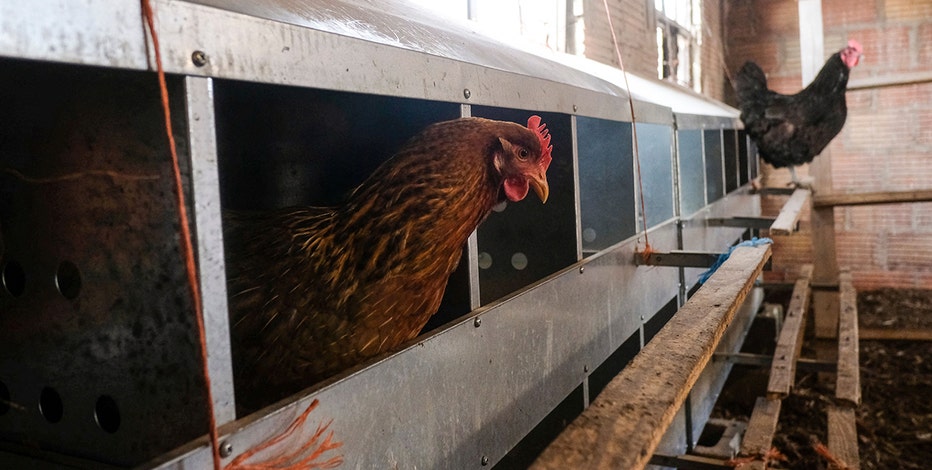
Bird flu solution: Vaccinate chickens or slaughter every infected flock?
Vaccines could be a way to suppress bird flu in the U.S. and avoid the slaughter of millions of chickens amid the rising price of eggs. But there are some concerns, too. Here's what to know.
A bird flu mystery
The outbreak tied to the strain that infected cattle spurred more concerns and questions about the possibility of the virus mutating further and infecting humans.
That's why Michigan was tapped to participate in a milk testing program that monitored dairy farms. A year later, testing is still going on. However, the dairy herd strain appears to have vanished
"We're not sure where the strain went," said Boring. "On the national level too. Our partners at the USDA and a lot of research institutions are looking at assessments of the virus. We haven't seen many detections for months."
Boring said the case "Illustrates a lot about the virus that we still don't know today."
Dig deeper:
The H5N1 outbreak in cattle was first identified in March 2024 when a dairy herd in Texas tested positive.
That detection was the source of the dairy herd outbreak that arrived in Michigan soon after. Shortly after, the Centers for Disease Control and Prevention reported its first human case.
The farmworker had likely been exposed while working with dairy cattle.
More than a dozen Michigan counties reported their own outbreaks among poultry and cattle farms. Another 61 people also tested positive for bird flu in 2024.
The potential for mutations in the virus is why MDARD is in communication with the DNR and MDHHS.
DNR has a warning as well
On the other side of the health concern is the transmission within wild migratory birds. The DNR is advising hunters to be wary of waterfowl and protect themselves from HPAI.
Monroe and St. Clair counties, both popular spots in Southeast Michigan for waterfowl hunting, have also reported outbreaks in backyard flocks.
"Make sure to take appropriate precautions when field dressing wild birds. In order to kill the virus, use a food thermometer to ensure that meat is cooked to an internal temperature of 165 degrees Fahrenheit," said Dr. Scott Larsen, DNR wildlife veterinarian. "It’s also important to properly clean and disinfect gear and equipment before coming into contact with domestic birds."
How does bird flu spread?
Bird flu can spread in various ways, including from flock to flock, from wild birds, through contact with other infected animals, or on clothing.
Transmission is most common during the migratory seasons of birds because that's when they travel over greater distances. Both birds living in someone's backyard or at a large commercial farm are susceptible to contracting HPAI.
As a result, MDARD frequently advises managers to prevent contact between domestic and wild birds by keeping them indoors during these seasons.
Anyone who works with flocks is encouraged to wash their hands before and after handling them.
Reporting bird flu cases
Potential cases of bird flu should be reported to the state, depending on the type of bird that is infected.
Domestic bird owners that see sudden deaths in a flock, a drop in egg production, or adverse health impacts should report the case to MDARD by calling 800-292-3939 during the day or 517-373-0440 after business hours.
Anyone that observes unusual or alarming behavior among wild birds are encouraged to contact the DNR through their Eyes in the Field app or by calling the lab at 517-336-5030.
The Source: Interview with MDARD Director and previous reporting was cited for this story.