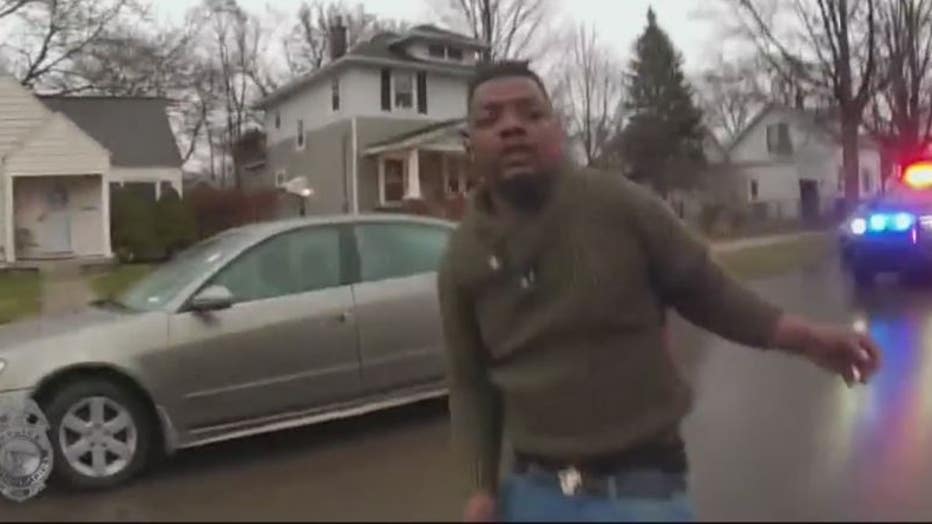
Fatal shooting of Patrick Lyoya could make lasting impact on future police traffic stops

Policing impact following tragic fatal shooting of Patrick Lyoya could be massive, says expert
David Robinson, an attorney and former Detroit police officer, believes the killing was not justified.
FOX 2 - Video released of the moments leading up to the deadly police shooting of Patrick Lyoya in Grand Rapids has reverberated across the state and country.
Footage shows Lyoya running from the officer who stopped him for driving with a license plate that allegedly did not belong to the vehicle. Lyoya apparently did not follow commands. They struggled and eventually, there was a fight over the officer’s Taser.
The officer was on top of Lyoya kneeling on his back at times, eventually, Lyoya would be fatally shot.
David Robinson, an attorney and former Detroit police officer, believes the killing was not justified.
"It’s execution-style, that’s my initial thought," Robinson said.
FOX 2: "Since you are a former police officer, how would you have handled that?"
"He should think before he acts, this officer acted before he thought," Robinson said. "I certainly don’t see that there was a justification to execute this young man. There certainly wasn’t an imminent threat - which under the circumstances of deadly force, there must be an imminent threat.
"This is the perfect example to shift the paradigm and for a police department to analyze itself and ask how could this outcome have been different."
Professor Daniel Kennedy of Oakland University says unintended consequences could be the result of limiting which police stops officers can make.
"Traffic stops for minor matters is how we caught Ted Bundy, it’s also how we caught Timothy McVeigh," Kennedy said."Traffic stops are not just about writing tickets, they also in some cases turn up some wanted people.
"There’s often a reason for something that I think needs to be looked into before we jump to conclusions. That's why I always think it's better to wait. Probably we could have waited days for this story until we had more information."