

Michigan cyclosporiasis cases hit 1,251 amid foodborne illness outbreak
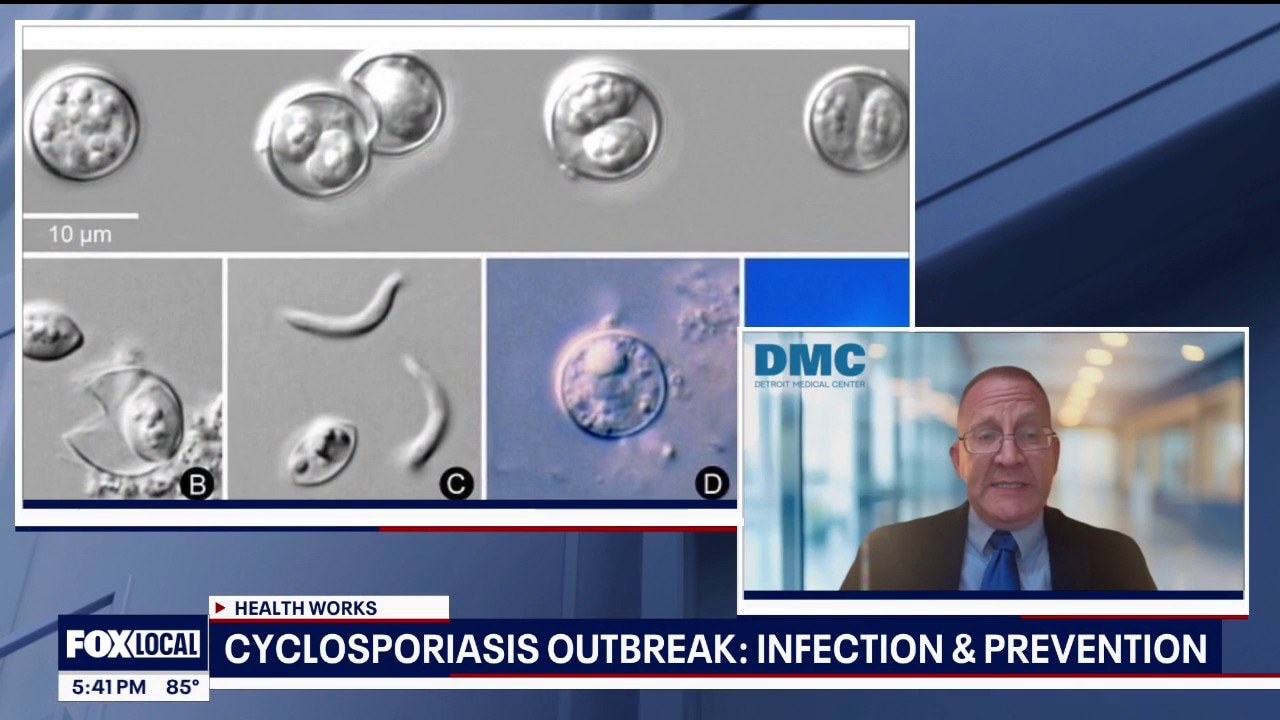
Cyclosporiasis in Michigan -- doctor explains what we need to know
Cases of the parasitic outbreak continue to climb, and Dr. Joel Kammeyer of the Detroit Medical Center explains how we can best protect ourselves.
(FOX 2) - The number of Michigan's cyclosporiasis cases continues to rise, with the latest figures eclipsing 1,200.
The latest reporting of the gastrointestinal illness outbreak from the state health department confirms 1,251 total cases as of 9:30 a.m. on July 9.
Cyclosporiasis Outbreak — The latest
By the numbers:
As cases continue to climb, officials are still uncertain about what is driving the surge in cases.
During that time, numbers have swelled from 572 over the weekend to over a thousand this week. Health officials first started noticing cases tied to the parasite in late June.
Over the past years, doctors have seen only dozens of potential cases, according to Corewell's Matthew Sims.
Big picture view:
As of July 9, 2026, no specific produce grower or supplier, or specific produce type has been identified as the source of the outbreak in southeast Michigan, the Michigan Department of Health and Human Services said.
But they’re detailing foods that have been previously linked to the illness.
Dig deeper:
The following foods have been specifically linked to previous Cyclospora outbreaks in the United States and Canada:
- Bagged salad mixes and kits (pre-cut lettuce blends with romaine, iceberg, red cabbage, carrots)
- Fresh cilantro (coriander leaves)
- Fresh basil
- Raspberries
- Snow peas
- Green onions (scallions)
What you can do:
If you are preparing or eating any of the following raw foods, take the following steps to reduce the risk of exposure:
- Lettuce/leafy greens: Buy whole heads of lettuce (rather than prewashed, bagged lettuce or salad mixes), throw away the outer 2–3 layers of leaves and wash the inner leaves under running water. For leafy greens that can be cooked, cooking is the safest option.
- Cilantro, basil: Wash thoroughly under running water, separating the leaves. Safest when cooked.
- Raspberries: Their bumpy surface makes them especially hard to clean; the parasite can hide in the tiny crevices. Safest when cooked (pies, jams etc.). Consider frozen raspberries as an alternative (freezing may reduce but does not guarantee elimination of the parasite).
- Snow peas: Wash under running water and rub the surface. Safest when cooked.
- Green onions: Trim the root end and remove the outer layer, wash thoroughly under running water. Safest when cooked.
What is Cyclosporiasis?
Cyclosporiasis is a diarrheal illness caused by infection with the parasite Cyclospora cayetanensis, which experts say is found in developing countries and is spread by food or water contaminated with feces.
Outbreaks have occurred in the US as a result of eating contaminated fresh produce in hot weather.
It is not known to spread from person-to-person.
RELATED: Cyclosporiasis cases by state: Foodborne parasitic illness continues to spread
Cyclosporiasis symptoms
Timeline:
Symptoms occur two to 14 days after exposure and may include:
- Frequent watery diarrhea
- Loss of appetite and weight
- Abdominal cramps and bloating
- Nausea (vomiting is less common)
- Low-grade fever
Anyone infected who does not get treatment, health experts say the illness may last for a few days to over a month. Symptoms could go away and then return one or more times.
Cyclosporiasis treatment
If you experience sudden, ongoing diarrhea, reach out to your health care provider and your local health department.
Symptoms can be improved with an antibiotic.