

Strange Ann Arbor foam turns out to be residue from honey locust tree seed pods
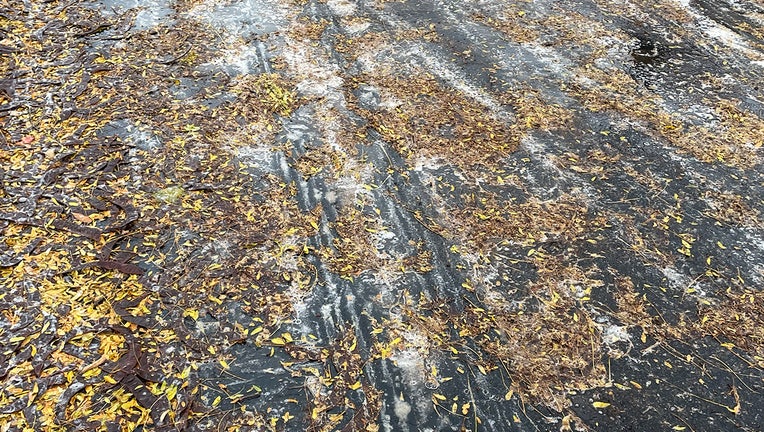
The foamy residue left over after vehicles ran over seed pods in Ann Arbor.
(FOX 2) - What was behind the foam that emerged on a street in Ann Arbor last December?
The curious question was posed by some tuned-in residents more than a month ago when the bizarre substance appeared to be washing down a city road.
The answer, discovered by members of the public works department in Ann Arbor, was not what anyone was expecting.
Big picture view:
If you ask Jennifer Lawson, the water quality manager for the city's systems planning unit, one of their biggest assets is their citizens.
They spend a lot of time reaching out to residents to make sure everyone is aware that if they see something that worries them, please let the department know.
"We have over 500 miles of stormwater pipe and conveyance, ditches, creeks in the city," Lawson said. "We don't have enough people to have eyes on them all the time, so we invite and ask people to become sort of our eyes on the street."
Fortunately, there's an app for that and on Dec. 10, photos showed an odd-colored foam collecting on Eighth Street in front of a park.
"In this instance that we're talking about in December with the foam, that actually came in through several different paths as a concern from residents because it looked like soap bubbles in the gutter line," said Lawson.
Local perspective:
Lawson said her workers first put up absorbent materials to soak up anything entering the pipeline. Then they began investigating the mystery.
It did not take long to find the source.
"Our public work staff tracked it up a hill, tracked it probably a quarter mile away to a parking lot where there was a lot of foam on the parking lt as well," she said.
That's when workers noticed a sticky substance on the ground. The source? Seed pods that had fallen from honey locust trees growing near the parking lot.
"We had rain, snowmelt, and the cars constantly driving over the seeds, crushed the seed pods, created that foamy substance," she said.
Rain then washed the substance down the road to where people initially reported the problem.
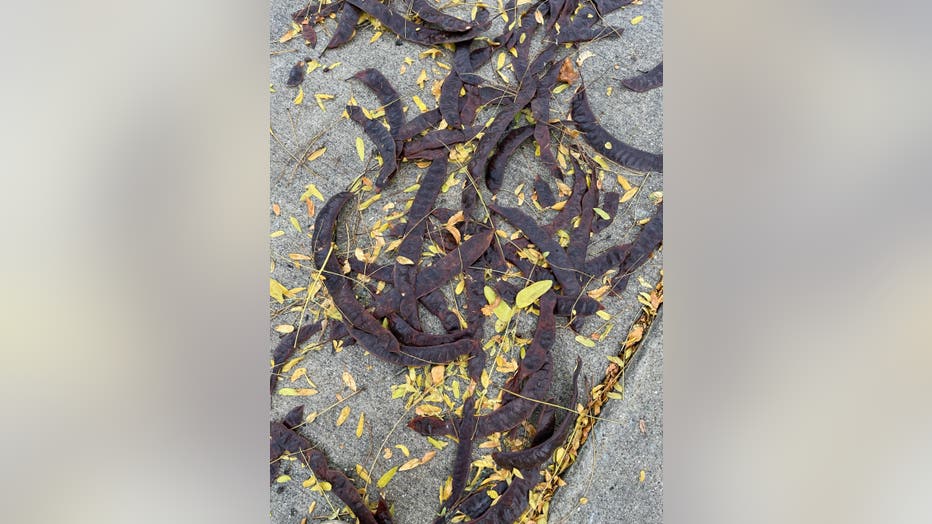
Honey locust tree seed pods. Photo via Jennifer Lawson.
Dig deeper:
So what's behind the foam?
What started as a call for concern about water being contaminated with an unknown substance later became a science lesson.
That's because the seeds from honey locust trees contain high levels of a material called a saponin, which is a natural compound a little like soap. The seeds in the pods are surrounded by a sticky pulp, which is why some refer to them as "soap beans" or "soap pods," according to MySeeds.Co.
Saponins are natural, biodegradable surfactants, which are common materials used in detergents and soaps to break down stains.
The bubbles are the result of the seed pods being ground up by cars driving over them, then mixing with water — not unlike soap.
Lawson said the preliminary research quelled any concerns among workers about something more concerning in the water supply. A sample was sent to a lab, which confirmed their suspicions.
The way Lawson sees it, it's a success story that nothing contaminated the water and residents were careful enough to be on the lookout just in case it was.
"I think it's a fantastic celebration to highlight because it turned out that it wasn't something nasty and gnarly ending up in the Huron River. It was a very vigilant citizen commenting a question ‘hey, what is going on?’ and we rely on that," said Lawson. "I'm so glad that we have people to ask the questions and want to know what's going on in the system."

Exploring lake sturgeon that live in the Great Lakes | Brother Nature
The Great Lakes are home to all kinds of wild life, including the lake sturgeon: an aquatic wonder that grows up to seven feet and lives as long as 125 years. They are also part of one of Michigan's most famous fishing seasons up in Black Lake, which is also one of its shortest.
What you can do:
The substance from seed pods can be used as a natural soap, as well.
One YouTube account tried it themselves. Take a look.
The Source: An interview with an Ann Arbor city official and MySeeds.Co were cited for this story.