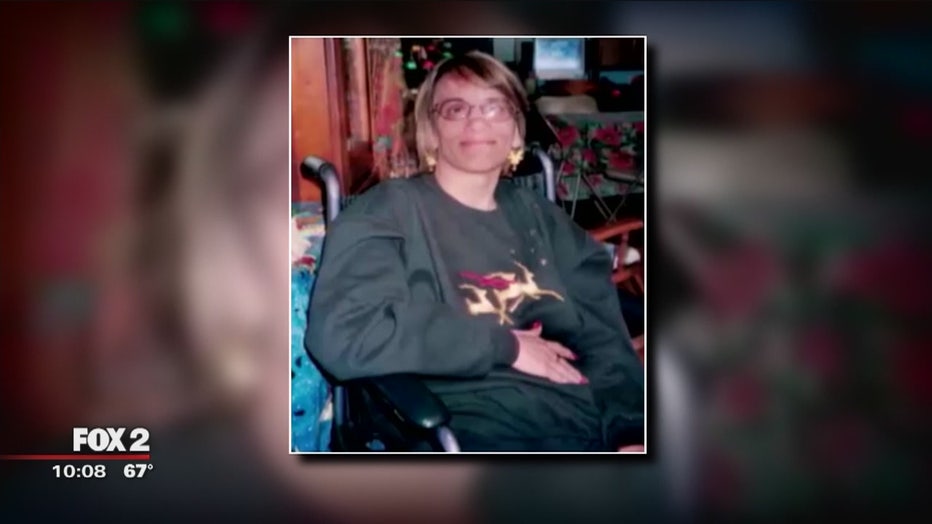
Trenton men who cared for mother with rare disease - now charged with her murder
TRENTON, Mich. (FOX 2) - Grant and Gabriel Balogh grew up like most boys playing sports, going on vacation and enjoying time with their family. But the boys eventually learned their family was different, haunted by a genetic curse that would impact the rest of their lives.
"When the doctor came out and told me she was for sure dead, I was freaking out, I couldn't handle it," said Gabe Balogh.

Part 1: Criminals or caregivers? Men who helped sick mother charged with killing her
Professional care was recommended, but Grant and Gabe became her caregivers. Instead of institutionalizing their mother, they let her live out her final days the way she wanted.
FOX 2: "Potentially there is a chance you could still be charged with murder?"
"Yeah."
>>Watch Part 2 below<<
Grant first began to notice changes with his mom in high school.
"She had to walk out with me and I felt bad for her," he said. "I could tell she couldn't walk that good. I didn't want her to feel embarrassed, but she wanted to be there for me, but I could see it in her hat it was already happening."
Their mother's battle
Vicki, was diagnosed with hereditary spinocerebellar ataxia - a degenerative disease that destroys the nerve fibers in the brain and spinal cord.
Over time, it causes slurred speech, trouble swallowing, loss of balance, fatigue, muscles to weaken and eventually waste away. The insidious disease killed Vicki's mother at 52 - her five uncles and her three brothers.
"It's horrible because you never see anything like it, I have never seen anything like it, but it is a huge part of our family," Grant said.
Symptoms started for Vicki in her 30s. The boys were forced to watch their mom lose her ability to move on her own.
After their father died from lung cancer in 2013. Vickie took a turn for the worse. There were countless trips to multiple doctors, including the National Institute of Health, but the boys say doctors told them there was no cure - and nothing more they could do.
That's when they say their mother told them she wanted to live out her final days with them, at their Trenton home.
FOX 2: "Did you ever get to the point where you said, 'You need to go to a home' or something like that, and what did she say?"
"She didn't want that," Gabe said.
"It crossed everyone's mind," Grant said. "I thought like that would be giving up, I'm not going to give up on my mom."
"I would specifically ask her if she wanted to go to a nursing home or if she felt she would be better off there," Gabe said. "She said, 'No I don't want to go to a nursing home.' She would specifically tell me that."
Professional care was recommended, but Grant and Gabe became her caregivers. Instead of institutionalizing their mother, they let her live out her final days the way she wanted.
"(Gabe) bathed her himself, and we did everything for her," Grant said. "She couldn't do much."
"She couldn't do anything," Gabe said.
FOX 2: "She was literally wasting away?"
"Yeah," (both).
On Oct. 23rd 2016, Vickie Balogh died at 57 years old. The brothers say as soon as they discovered their mother wasn't breathing, they decided to have Gabriel rush her to Beaumont Southshore in Trenton. They thought that would be faster while Grant stayed at home to lock up the house.

Part 2: Charged with killing their mother, the fight to clear their names
Seven months after Vickie died, police arrested Grant and Gabe Balogh for murder, involuntary manslaughter and abuse. They are accused of neglecting their ailing mother until she died.
Questions begin
The hospital staff realized Vickie Balogh had been dead for several hours, sparking questions.
According to the police report, her sons said it was "a normal day." They last spoke to their mom at 10 a.m. Gabe checked on her again at noon and thought she was sleeping. It wasn't until 5 p.m. that day, they suspected she had stopped breathing.
But by the time Gabe got her to the hospital, the report says her body was cold to the touch, rigor mortis had started to set in.
Her body was emaciated with several sores and lesions. She appeared unkempt and dirty. Not knowing her history and that Vickie was suffering from the end stages of ataxia, police were suspicious. They searched the brothers' Trenton home, calling it filthy throughout.
The living room where their mother slept on a mattress in front of the TV, was stained with urine.
The assistant Wayne County medical examiner performed an autopsy in October. A ruling came two months later - saying her death was caused by cachexia better known as wasting disease due to malnutrition. But a manner of death was never determined.
Seven months after Vickie died, police arrested Grant and Gabe Balogh for murder, involuntary manslaughter and abuse. They are accused of neglecting their ailing mother until she died.
"Obviously that is very scary," Grant said. "But on the other side I know, like, in my heart, that I didn't do anything, and this can't be real."
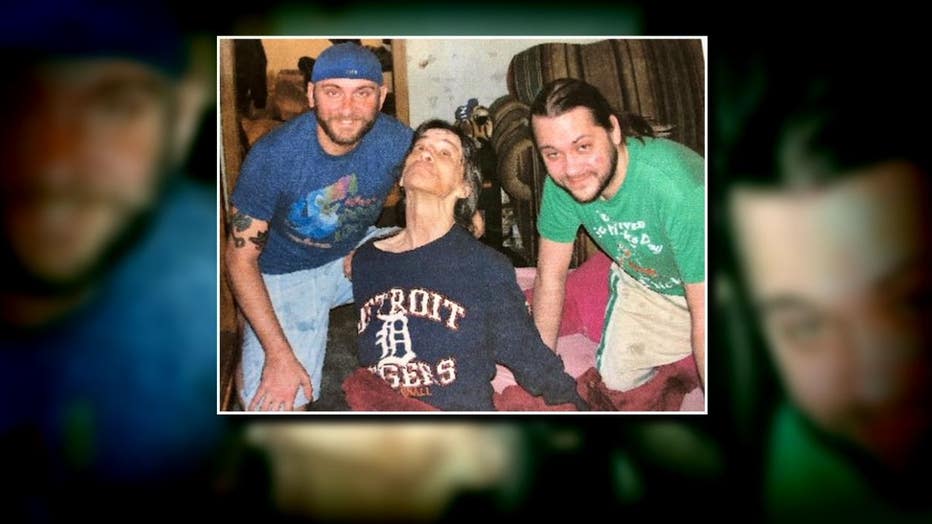
Attorney Kevin Simowski has been defending the Balogh brothers from the start.
"They took it at face value and the Wayne County medical examiner had no experience with this disease," said Simowski. "The police had no experience with this disease, so they kind of jumped to a conclusion. They formed a theory and tried to fit evidence into that."
Simowski said the brothers didn't cause Vickie's death - the disease caused her death. And he's not alone.
When this case went to 33rd District Court in Woodhaven - Judge Jennifer Hesson said there is no evidence Gabe and Grant caused the death of their mother and dismissed the charges.
The battle for vindication
Yet the Wayne County prosecutor pushed on - taking the case to Wayne County Circuit Court, where experts testified the skin ulcers and lesions Vickie had on her body were common with the disease. And they said she did not have any infection that would indicate the uncleanliness of the house advanced her death in any way.
Perhaps the most convincing testimony - when Vickie's own father testified saying her daughter saw how her brother suffered trying to fight the disease with a feeding tube. She said, "I do not want to live like that."
"No one has ever seen this disease before," Grant said. "So when you see all these people who have had it in my family, my mom saw all these people die of it. So she knew what she wanted."
"These two men I give a lot of credit," Simowski said. "Like I said in court, it would have been very easy in your late 20s, to say 'Hey mom you would be better off going to a home.' Two single guys - you get a lot more freedom - they made a choice to honor their mother's choice."
Circuit Court Judge Cynthia Hathaway also dismissed the charges. But Wayne County Prosecutor Kym Worthy insisted the brothers murdered their mom - taking the case to the Michigan Court of Appeals, where the same case was argued again.
Prosecutor Worthy declined to comment because of the pending litigation but referred FOX 2 to a 50-page brief. In it, she says the victim could hear crying from the home - that there was a complaint made. FOX 2 came to the home and spoke to the neighbors who live nearby and they said they never heard any crying. In fact, they were never even interviewed by police.
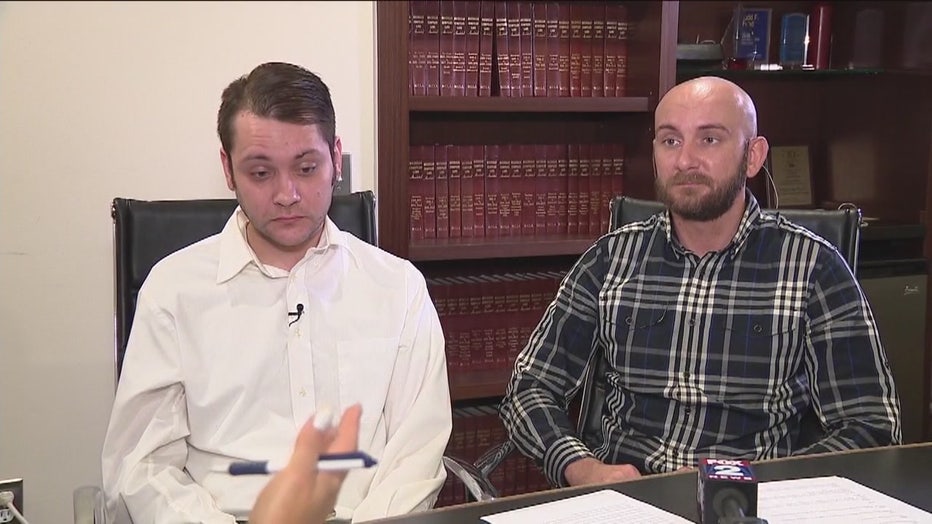
The prosecutor is referring to an anonymous complaint when Vickie was still alive, that also claimed one of the sons could be heard yelling at his mom.
But, it was actually the defense who called the Adult Protective Services investigator, who responded to the complaint to appear as a witness in court.
Jaqueline Thurmand testified the complaint was unsubstantiated and she determined that Vickie Balogh "was being well taken care of by her sons, Gabe and Grant." and it was her wish to live in her home with her two sons.
FOX 2: "To a lay person this is going to look like neglect or poor care."
"Right," said Dr. Vikram Shakkottai. "At the end stage of the disease, when there's an inability to maintain nutrition, there is wasting of muscles, there is a loss of muscle mass. Weight is abnormally low and people can look like they did not receive adequate nutrition otherwise."
Dr. Vikram Shakkottai is a neurologist at the University of Michigan Hospital. He is one of three doctors in the region that specializes in Ataxia and are constantly conducting research in hopes of finding a cure.
He testified in the Balogh case. He says most doctors and medical examiners have a lack of knowledge about this rare disorder, which often lead to misdiagnosis. Shakkottai says many of his patients with inherited ataxia choose not to seek support care after they watch other family members suffer a long and painful death.
"It likely doesn't extend quality of life, even if at all, it extends life," he said. "And the majority of my patients with progressive swallowing difficulties from their Ataxia do opt not to pursue this and they are well within their rights."
Carriers of the gene have a 50 percent chance of passing it on to a child. Gabe has learned he is suffering from the same thing that has claimed the life of his mother, three uncles, grandmother and five great uncles.
"I just want this to be over with so I can enjoy the last bit of life I have, you know, having to deal with this isn't anyway to live," Gabe said.
Their fate now relies on the appellate court which will decide whether they will face charges for murdering and abusing their mother, which would carry another life sentence, behind bars.
"I know I didn't do anything wrong," Gabe said. "It's crazy to me that this is still going on."