

Why is Detroit sinking? New study measures subsidence in Southeast Michigan

New study measures how much Detroit sinks every year
The city of Detroit is sinking. That's the conclusion of a new study from the journal Nature looking at land subsidence. However, the Motor City isn't the only urban center to be falling - and the reason it differs from other areas around the U.S.
(FOX 2) - The city of Detroit is sinking.
That's the conclusion of a new study from the journal Nature looking at land subsidence. However, the Motor City isn't the only urban center to be falling - and the reason it differs from other areas around the U.S.
Big picture view:
Detroit is sinking at a rate of 1.726 mm a year, according to a study titled "Land subsidence risk to infrastructure in US metropolises."
Researchers looked at the sinking rates of 28 cities in the U.S., finding Detroit among the top-10 in subsidence.
Well documented around the world, the gradual sinking of the Earth's surface poses a range of threats, from destabilizing infrastructure like buildings, roads, and bridges, to worsening flood risks.
The city with the greatest subsidence was Houston, falling at a rate of 5.2 millimeters a year.
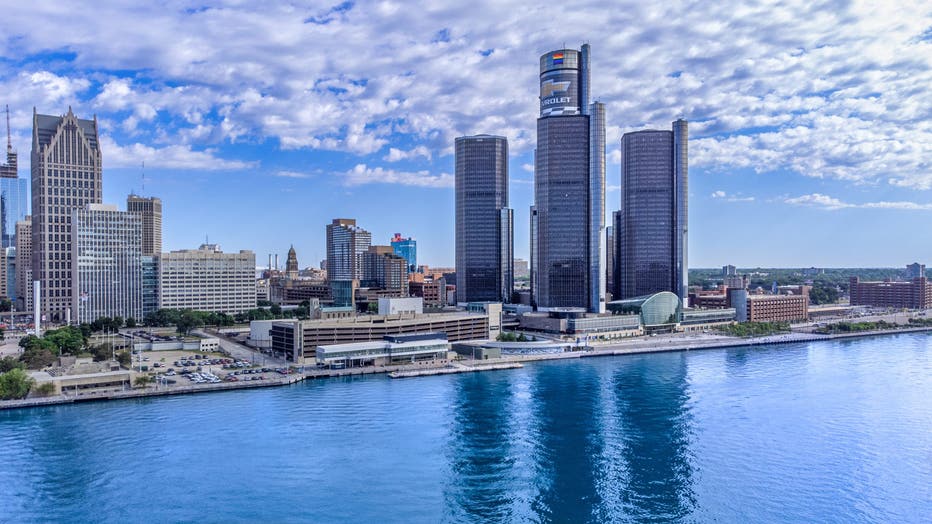
DETROIT, MICHIGAN, UNITED STATES - 2024/06/14: (EDITORS NOTE: Image taken with a drone.) The Renaissance Center (complex of skyscrapers with the Chrevrolet sign) in city urban skyline by the Detroit River. (Photo by Roberto Machado Noa/LightRocket vi
Dig deeper:
The most common reason that cities sink is tied to the extraction of groundwater.
However, Detroit's sinking is less tied to the removal of water under its buildings than a process called glacial Isostatic adjustment (GIA), which is a natural movement of land that was carved out by glaciers.
The National Oceanic and Atmospheric Administration describes GIA as similar to lying on a soft mattress and then getting up from the same spot.
"You see an indentation in the mattress where your body had been, and a puffed-up area around the indentation where the mattress rose. Once you get up, the mattress takes a little time before it relaxes back to its original shape," the agency said.
That is what's happening in Detroit.
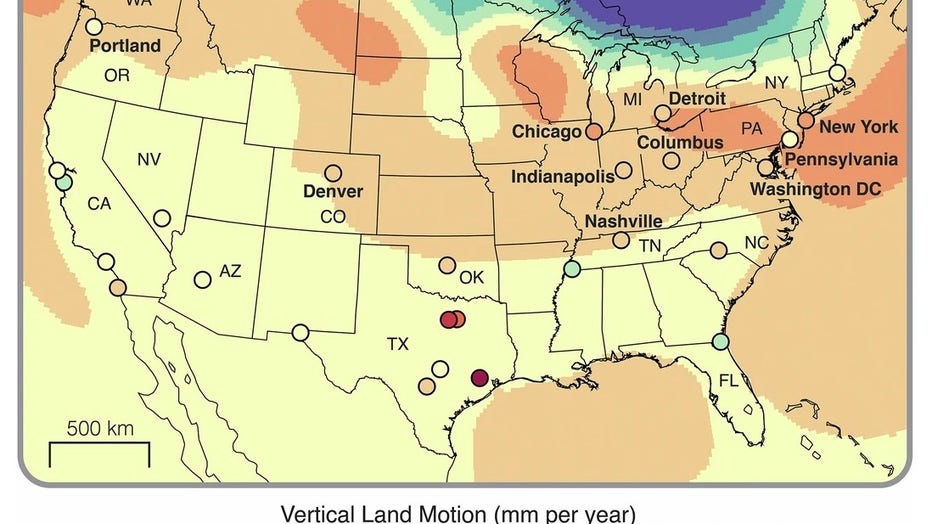
Despite receding thousands of years ago, glaciers continue to influence the landscape. In Detroit, they contribute to the city's subsidence every year.
Why you should care:
According to researchers, there have been 225 building failures in the U.S. between 1989 and 2000.
About 2% of those incidents were because of subsidence-related issues. However, it's likely that the ground sinking played a role in other infrastructure issues.
And with climate change worsening droughts and speeding up the extraction of groundwater, more subsidence is likely in the future.
The Source: A study published in the journal Nature and research from the National Oceanic and Atmospheric Administration was used in this story.