

Michigan breweries now allowed to sell nonalcoholic beers from other breweries
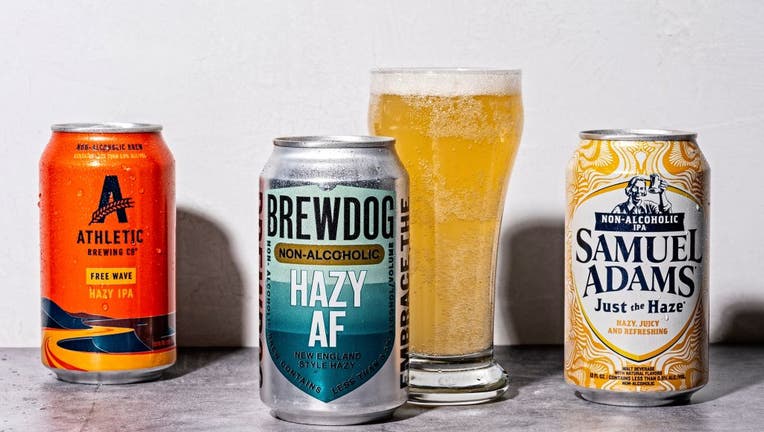
WASHINGTON, DC - MARCH 11: Group 3 "Hazy IPA" Non-alcoholic beers photographed for Food in Washington, DC on March 11, 2024. (Photo by Scott Suchman for The Washington Post via Getty Images; food styling by Lisa Cherkasky for The Washington Post via
LANSING, Mich. (FOX 2) - There's good news for those looking to cut back on booze without missing out on the social side of breweries.
Just before the holidays, Michigan passed a law allowing breweries to sell nonalcoholic beer that the brewery did not produce. This greatly expands nonalcoholic beer options that customers have access to when they go out.
While large brewers have started making nonalcoholic versions of their beers, like Samuel Adams and Blue Moon, and some breweries, like Go Brewing and Athletic Brewing Co., are churning out exclusively NA products, the equipment needed to make beers without alcohol is expensive. This can prohibit smaller local breweries from making NA beers. The new law makes it where breweries that don't have the ability to make their own NA beer can still appeal to those looking for a brew without the alcohol.
What the bill allows:
Senate Bill 512 changes the definition of beer to "a beverage obtained by alcoholic fermentation of an infusion or decoction of barley, malt, hops, sugar, or other cereal in potable water," with no reference to alcohol content in such beverages. This allows for NA beer to fall under the state's three-tier distribution system that alcohol follows: manufacturers sell beer, and now NA beer, to wholesalers, who then distribute the beer to retailers, such as breweries.
Previously, breweries were restricted to only selling beer made in its tasting room. Now, nonalcoholic beers from other breweries can be sold and consumed both in the tasting rooms and off-premises.

Go Brewing non-alcoholic beer now available at Meijer stores
Joe Chura, founder and president of Go Brewing, announces his non-alcoholic beer is now available at Meijer stores across Michigan. The launch comes just in time for "Sober October."
What they're saying:
Michigan Sen. Sam Singh (D-East Lansing), who sponsored the bill, said this change will help breweries by allowing them to appeal to more customers who want nonalcoholic options.
"Michigan’s breweries and taprooms are vital parts of our state’s economic engine and social culture, and this new law enables them to appeal to and serve even more Michiganders who are seeking out non-alcoholic options," Singh said.
One of the bill's cosponsors, Sen. Roger Hauck (R-Mt. Pleasant), also pointed to the economic impact of the bill, which also allows alcohol to be sold in packages with university logos, and makes it a violation when a retailer makes a payment to a wholesaler, the Michigan Liquor Control Commission (MLCC), or the state that are dishonored by a financial institution for lack of sufficient funds.
"These long-overdue updates to our liquor laws will help support thousands of good-paying jobs and give consumers more options," he said. "These commonsense changes will be good for everyone in Michigan’s craft beer industry, which accounts for more than $140 million in wages for our workers and contributes over $600 million to our economy."
Dry January:
The new law went into effect just in time for Dry January, a time when some people stop drinking or scale back their drinking for a month.
It's become a worldwide movement that encourages people to revisit their relationship with alcohol.
Dry January USA said its "mission is to create a vibrant, supportive community that empowers individuals to reflect on their habits, reset their relationships with alcohol, and recharge their physical and mental well-being for the year ahead."
The Source: SB 512, press releases, and Dry January USA's website were used to write this story.