

Windsor mayor ready to cut Detroit Grand Prix sponsorship if Trump tariffs go through

Detroit Grand Prix could lose Canadian sponsorship if Trump tariffs occur
Despite tariffs on Canadian goods being paused for 30 days, the mayor of Windsor, Drew Dilkens, is threatening to stop his City’s $50,000 sponsorship of The Detroit Grand Prix if such motions take place.
DETROIT (FOX 2) - Talks of tariffs from the Trump Administration have left a rippling effect between the U.S. and Canada. Meanwhile, across the river from Detroit, changes are already in motion. .
What they're saying:
Despite tariffs on Canadian goods being paused for 30 days, the mayor of Windsor, Drew Dilkens, is threatening to stop his City’s $50,000 sponsorship of The Detroit Grand Prix if such motions take place.
Dilkens is also threatening to stop subsidizing the Windsor-Detroit tunnel bus that brings 40,000 Canadians to Detroit every year-mostly to spend money.
The mayor acknowledges that the tariffs are used in part as a vehicle to strengthen boarder security and to prevent the illegal flow of fentanyl.
"Extent that we have illegal drugs going back-and-forth gosh I’ve got problems in my own city, and I haven’t been to a city of our continent that doesn’t see the effects of fentanyl," he said.
Dig deeper:
Lisa Lakian with Race Canada says the Canadian Grand Prix drivers are going to lose money.
"Because the sponsorship gives the individual driver however they win a piece of their wings so that’s gonna take money from their pocket," she said.
As far as eliminating the Windsor tunnel bus, the mayor says his city is paying for the bus and Detroit is getting all the benefits.
"How can I possibly act as a subsidize and act as the economic engine for for 40,000 people to go to Detroit when our country is under economic threat by the president? If you could talk to President Trump right now, I would say let’s figure this out together," he said.
What is a tariff?
Big picture view:
Tariffs are taxes imposed on imported goods that are paid by the importer. The purpose of a tariff is to raise the price of imported goods and services to discourage consumption and get people to purchase more local products to stimulate the nation's economy.
The idea is to encourage more local production so that imported goods can be replaced by domestic products, raising revenue for the government.
According to a report featured in the Journal of Economic Perspectives, it is common for U.S. presidents to introduce protectionist measures — like heavy tariffs — early on in their terms.
In 2018, Trump imposed tariffs on $283 billion of US imports in 2018, with rates ranging between 10% and 50%. In response, several countries including China, Russia, Canada, Mexico and the EU all filed cases against the U.S. with the World Trade Organization. Many of those countries also retaliated with tariffs of their own.
How will Michigan be affected by new tariffs?
Michigan's auto industry, farmers, and the state's budget surplus could all take a financial hit.
Governor Gretchen Whitmer said last December that the auto industry is something she's very worried about.
"That's the nightmare scenario for all of us," Whitmer said in December, ahead of Trump taking office.
Dig deeper:
For the auto industry, the federal government will impose a tax on every auto part that comes in to the U.S. from Canada or Mexico. Those parts wind up on the assembly line and, as the part goes up, so does the cost of the car.
Once the vehicle is complete, the cars go on the lot and it's going to lead to sticker shock. As buyers turn away, that means fewer sales and, eventually, lower profits.
Whitmer argues there is no upside to this.
"It will make it even more difficult for our auto industry because the cars that we buy which are Michigan made are back and forth from all over parts of North America and China. We've got to be mindful of that," Whitmer said.
Michigan farmers are already worried about losing migrant farmworkers under the President's aggressive deportation round-up . The tariffs could impact the price of everything at the store, according to Chuck Lippstreau from Michigan's Agri-Business Association.
"Tariffs on agriculture and products and food will ultimately lead to price increases. That is a concern that every Michigan family should be aware of," Lippstreau said.
Farmers worry that will lead to less food to sell, meaning lower sales and profits.
"That does hurt the farmers' opportunity to be successful and grow their economy long term," Lippstreau said.
The third potential loser in all this are Michigan citizens. Fewer dollars flowing into state coffers means fewer dollars for state services and programs.
What's next:
If the tariffs are taken off the table, we will see Windsor’s threats off the table. And the mayor said there’s nothing else up his sleeve, and he has a good relationship with Mayor Duggan.
Featured
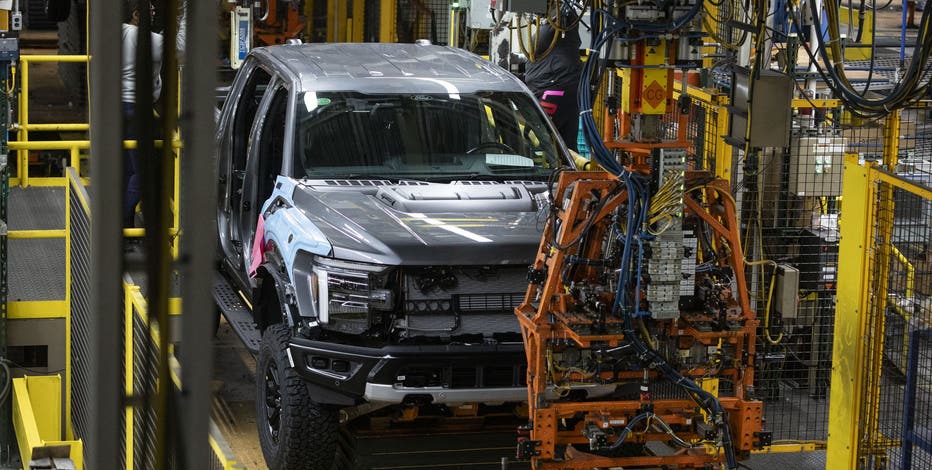
What is a tariff? Three ways Trump's tariff on Mexico and Canada would impact Michigan
Trump's tariffs could have lasting impact on Michigan in multiple ways and it's more than just the auto industry.